Hall Art Foundation
Skip to main content
  • Menu
  • About
  • Exhibitions
  • Locations
    • Derneburg
    • Vermont
    • MASS MoCA
  • Loan Program
  • Collection
  • Media
    • Publications
    • Videos
  • News
  • Contact
  • BUY TICKETS
  • EN
  • DE
Menu
  • Menu
  • Menu
  • BUY TICKETS
  • EN
  • DE
Georg Baselitz

Georg Baselitz

  • Selected Artworks
  • Exhibitions
  • Loan Program
  • Publications
  • Press
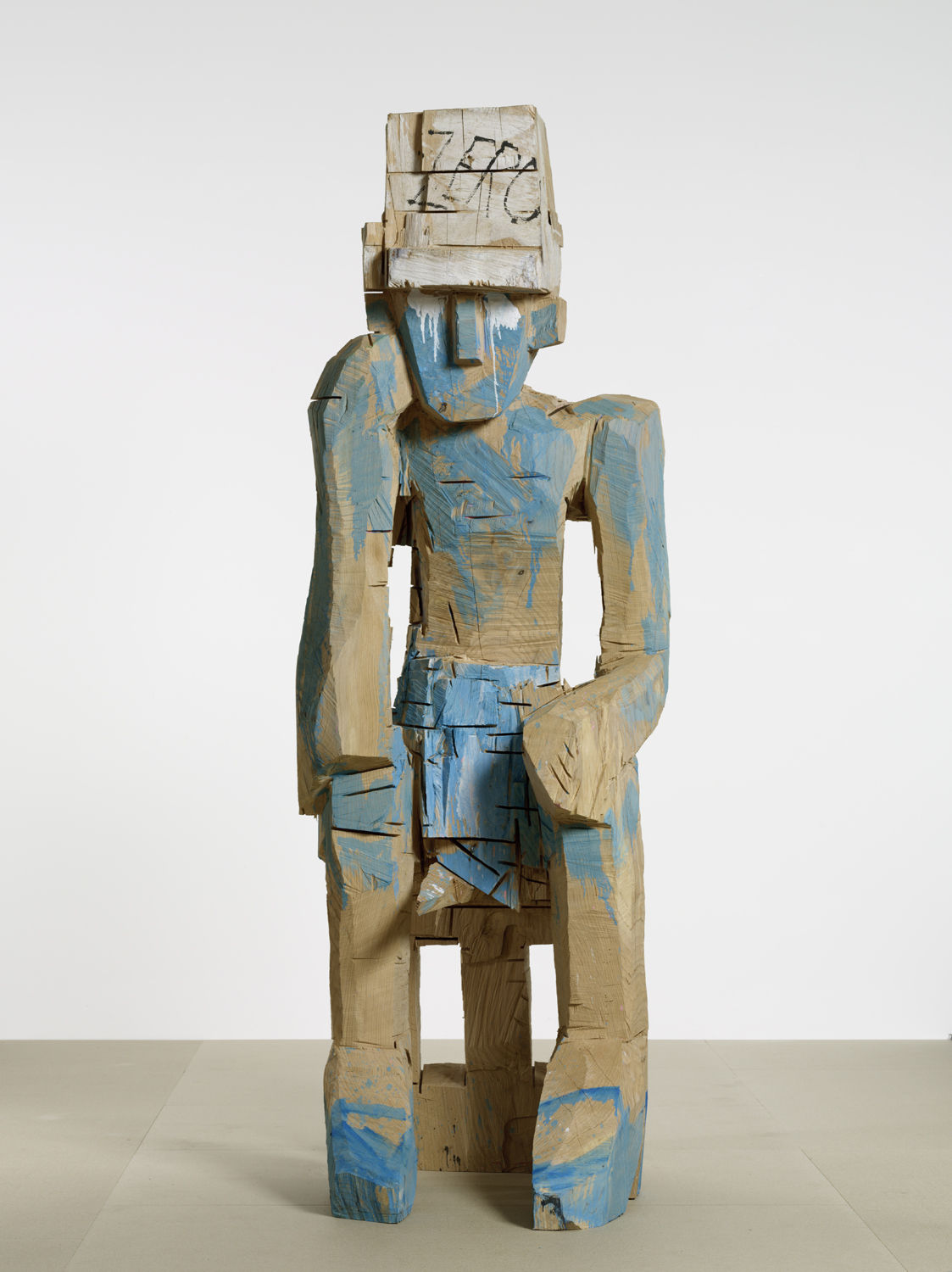
Georg Baselitz, Dunklung Nachtung Amung Ding, 2009

Georg Baselitz

Dunklung Nachtung Amung Ding, 2009
wood, oil paint
121 1/2 x 47 x 49 inches (308 x 120 x 125 cm)
Hall Collection
© the artist

Further images

  • (View a larger image of thumbnail 1 ) Georg Baselitz, Paula, 2018
  • (View a larger image of thumbnail 2 ) Georg Baselitz, Paula, 2018
  • (View a larger image of thumbnail 3 ) Georg Baselitz, Paula, 2018
Thirty years after making Modell für eine Skulptur (1979-80), Baselitz completed the monumental sculpture, Dunklung Nachtung Amung Ding (2009). The seated figure wears a white cap that resembles Baselitz's studio...
Read more

Thirty years after making Modell für eine Skulptur (1979-80), Baselitz completed the monumental sculpture, Dunklung Nachtung Amung Ding (2009). The seated figure wears a white cap that resembles Baselitz's studio hat from this period, which the artist first included e.g. in an earlier sculpture titled Meine neue Mütze (2003). Adapted to possibly also resemble a wartime pimpf style with shortened brim, Baselitz then added to the cap the painted inscription ZERO, suggesting both the starting point for inspiration and a reference to Stunde Null (zero-hour, midnight on 8 May 1945). The hulking figure mirrors Rodin's The Thinker (1904) in overall form but not in its precise execution, with splattered and uneven blue paint perhaps interrupting a moment of contemplation it refers to the much older sculptural tradition of the "Pensive Christ" which is still popular in especially Eastern European Folk Art (e.g. in Poland as 'Chrystus Frasobliwy'). The grain of the cedar wood is conspicuous and acts as an additional visual layer, both within the produced rough and jagged edges as well as the inherent cracks within the material.

Close full details
Previous
|
Next
100 
of  105

HALL ART FOUNDATION

Reading, Vermont

Visit

Tickets

KUNSTMUSEUM SCHLOSS Derneburg

Derneburg, Germany

Visit

Tickets

Newsletter

HALL ART FOUNDATION

Reading, Vermont

Visit | Tickets


KUNSTMUSEUM SCHLOSS Derneburg

Derneburg, Germany

Visit | Tickets


Newsletter

Facebook, opens in a new tab.
Instagram, opens in a new tab.
Privacy Policy
Manage cookies
Unless otherwise noted, illustrated works belong to Andy and Christine Hall, HCI, or the Hall Art Foundation.
Copyright © 2026 Hall Art Foundation
Site by Artlogic

This website uses cookies

This site uses cookies to help make it more useful to you. Please contact us to find out more about our Cookie Policy.

Manage cookies
Reject non essential
Accept

Cookie preferences

Check the boxes for the cookie categories you allow our site to use

Cookie options
Required for the website to function and cannot be disabled.
Improve your experience on the website by storing choices you make about how it should function.
Allow us to collect anonymous usage data in order to improve the experience on our website.
Allow us to identify our visitors so that we can offer personalised, targeted marketing.
Save preferences
Close

Join our mailing list

Signup

* denotes required fields

We will process the personal data you have supplied to communicate with you in accordance with our Privacy Policy. You can unsubscribe or change your preferences at any time by clicking the link in our emails.