Hall Art Foundation
Skip to main content
  • Menu
  • About
  • Exhibitions
  • Locations
    • Derneburg
    • Vermont
    • Mass MOCA
  • Loan Program
  • Collection
  • Media
    • Publications
    • Videos
  • News
  • Contact
  • Buy Tickets
  • EN
  • DE
Menu
  • Menu
  • Menu
  • BUY TICKETS
  • EN
  • DE

Ramos, Rosenquist, Ruscha: Pop Perspectives

Past exhibition
10 May - 30 November 2025 Vermont
  • Information
  • Installation Views
  • Artworks
  • Press
  • Artist
  • Pop Perspectives brings together the paintings of three seminal figures in American Pop Art: Mel Ramos, James Rosenquist, and Ed Ruscha. Born within a few years of each other and all first championed by the legendary dealer Leo Castelli, these artists developed distinct yet intersecting approaches to the visual language of postwar consumer culture.

  • INFORMATION

    In an era defined by the rapid expansion and availability of popular imagery in advertising, films, comic books and everyday...

    Mel Ramos, Camilla - Queen of the Jungle Empire, 1963

    In an era defined by the rapid expansion and availability of popular imagery in advertising, films, comic books and everyday consumer products, Ramos, Rosenquist, and Ruscha each forged unique artistic identities while simultaneously celebrating and critiquing their shared cultural landscape. Their paintings engage with the glossy seductions of commercial culture, yet each artist twists the language of Pop in his own way—Ramos with his playful yet provocative figures intertwined with consumer goods, Rosenquist with his cinematic, fragmented, and surreal compositions drawn from advertising, politics, and consumer culture, and Ruscha with his minimal and poetic text-based works that reflect the landscape, architecture and culture of the American West. This exhibition isn’t just about three artists who happened to emerge in the same moment—it’s about how their work reflects, critiques, and ultimately reshapes the iconography of 20th-century America. Through their paintings, we see the evolution of Pop Art beyond the factory-like seriality of Andy Warhol or the process-focused renderings of Roy Lichtenstein. Instead, these artists offer a more nuanced, often ironic, engagement with the visual overload of their time.
  • Since the 1960s, Mel Ramos (1935-2018) has made playful and ironic paintings of female nudes that appropriate the visual language...

    Mel Ramos, Ketsup Kween (Catsup Queen), 1965

    Since the 1960s, Mel Ramos (1935-2018) has made playful and ironic paintings of female nudes that appropriate the visual language of advertising and popular culture. Inspired by sources as varied as comic books, pin-up magazines, classic Hollywood cinema and iconic paintings of female nudes in the cannon of art history, his provocative and humorous works explore and satirize the idealization of the female form in art, fashion and advertising. Camilla - Queen of the Jungle Empire (1963) presents a voluptuous and self-assured Marilyn Monroe like female as a 1940s comic book heroine. Then, in works like Ketsup Kween (Catsup Queen) (1965), Ramos juxtaposes fully nude female figures with images of consumer products. Influenced by his teacher and friend, Wayne Thiebaud, Ramos’ scantily clad and powerful women are painted in thick, vivid colors within sharp multi-hued contour lines and presented against neutral color fields.
  • When he first arrived in New York City in 1955, James Rosenquist (1933-2017) supported himself by painting commercial billboards, often...

    James Rosenquist, The Monsoon Begins, 1984

    When he first arrived in New York City in 1955, James Rosenquist (1933-2017) supported himself by painting commercial billboards, often in the Times Square area. During this time, he became exceedingly skilled with the techniques of enlarging photographs in paint to the scale of billboards. Realizing he could apply the same techniques to his own artworks, Rosenquist began making often monumental paintings that fragmented, juxtaposed, layered and interwove imagery from popular culture, politics and advertising. Loaded with references and contemporary symbols, Rosenquist’s paintings reflect contemporary life in America while exploring the role of advertising and consumer culture in art. In The Monsoon Begins (1984), Rosenquist uses a crosshatch technique to intersect imagery of vibrant tropical flowers with fragments of women’s faces taken from magazines clippings. Interweaving a commercialized and idealized representation of beauty, Rosenquist showcases the inherent beauty of nature and highlights the paradox of two worlds that inform our visual vocabulary and experience of the world today.


  • Since the 1960s, Ed Ruscha (b. 1937) has explored the role of language in painting, drawing, photography, printmaking, and bookmaking...

    Ed Ruscha, Pretty Girl vs. Evil and Trouble, 1979

    Since the 1960s, Ed Ruscha (b. 1937) has explored the role of language in painting, drawing, photography, printmaking, and bookmaking by using the meaning and formal qualities of words as his principle subject matter. The words and phrases that Ruscha uses as his subjects are derived from American vernacular, advertising, and popular culture. Decontextualized from time and place, letters, words, and phrases take on a symbolic quality as Ruscha explores their formal qualities. Ruscha’s monumental painting, Pretty Girl vs. Evil and Trouble (1979) depicts an exaggerated horizontal sunset devoid of any features or landmarks except for two subtle lines with arrows along the bottom left and right sides. One points left to “PRETTY GIRL MOVING THIS WAY", while "EVIL AND TROUBLE GOING THIS WAY" points to the right. For Ruscha, sunsets represent transformation and the ephemeral nature of an ever-changing landscape. The expansive format of the painting recalls the landscape of the American West and suggests the passage of time as the muted colors and shifting tones stretch across the canvas like one's experience gazing out the window of a moving car.
  • Installation Views
  • Artworks
    • Mel Ramos, The Nile Queen, 1963
      Mel Ramos, The Nile Queen, 1963
    • Mel Ramos, Camilla - Queen of the Jungle Empire, 1963
      Mel Ramos, Camilla - Queen of the Jungle Empire, 1963
    • Mel Ramos, Ketsup Kween (Catsup Queen), 1965
      Mel Ramos, Ketsup Kween (Catsup Queen), 1965
    • Mel Ramos, The Drawing Lesson #3, 1987-1988
      Mel Ramos, The Drawing Lesson #3, 1987-1988
    • James Rosenquist, Head on Another Shape: Study for Big Bo, 1966
      James Rosenquist, Head on Another Shape: Study for Big Bo, 1966
    • James Rosenquist, Glass of Brandy, 1969
      James Rosenquist, Glass of Brandy, 1969
    • Robert Rauschenberg, Waiting for Bob, 1979
      Robert Rauschenberg, Waiting for Bob, 1979
    • James Rosenquist, Deflector, 1982
      James Rosenquist, Deflector, 1982
    • James Rosenquist, The Monsoon Begins, 1984
      James Rosenquist, The Monsoon Begins, 1984
    • Ed Ruscha, Pretty Girl vs. Evil and Trouble, 1979
      Ed Ruscha, Pretty Girl vs. Evil and Trouble, 1979
    • Ed Ruscha, Mares, 2001
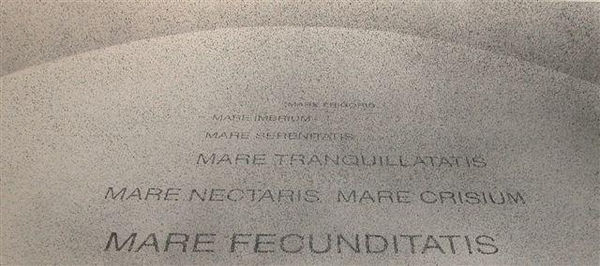
      Ed Ruscha, Mares, 2001
    • Ed Ruscha, Long, Stormy, 1995
      Ed Ruscha, Long, Stormy, 1995
  • Press

    • VERMONT STANDARD, ‘Sometimes you have to look beyond the traditional’
      Press

      VERMONT STANDARD

      ‘Sometimes you have to look beyond the traditional’ April 17, 2025
      Happily situated on a former dairy farm in Reading, the Hall Art Foundation is reopening its doors for the season on May 10 to showcase four vibrant and exciting exhibits.
  • Artist

    • James Rosenquist
      Artists

      James Rosenquist

    • Mel Ramos
      Artists

      Mel Ramos

    • Ed Ruscha
      Artists

      Ed Ruscha

  • Installation views: Jeffrey Nintzel
Back to exhibitions

HALL ART FOUNDATION

Reading, Vermont

Visit

Tickets

KUNSTMUSEUM SCHLOSS Derneburg

Derneburg, Germany

Visit

Tickets

Newsletter

HALL ART FOUNDATION

Reading, Vermont

Visit | Tickets


KUNSTMUSEUM SCHLOSS Derneburg

Derneburg, Germany

Visit | Tickets


Newsletter

Facebook, opens in a new tab.
Instagram, opens in a new tab.
Privacy Policy
Manage cookies
Unless otherwise noted, illustrated works belong to Andy and Christine Hall, HCI, or the Hall Art Foundation.
Copyright © 2026 Hall Art Foundation
Site by Artlogic

This website uses cookies
This site uses cookies to help make it more useful to you. Please contact us to find out more about our Cookie Policy.

Manage cookies
Reject non essential
Accept

Cookie preferences

Check the boxes for the cookie categories you allow our site to use

Cookie options
Required for the website to function and cannot be disabled.
Improve your experience on the website by storing choices you make about how it should function.
Allow us to collect anonymous usage data in order to improve the experience on our website.
Allow us to identify our visitors so that we can offer personalised, targeted marketing.
Save preferences
Close

Join our mailing list

Signup

* denotes required fields

We will process the personal data you have supplied to communicate with you in accordance with our Privacy Policy. You can unsubscribe or change your preferences at any time by clicking the link in our emails.