Anselm Kiefer: Open Seasonally
-
-
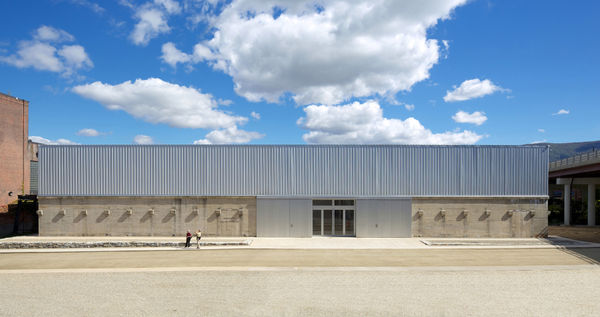
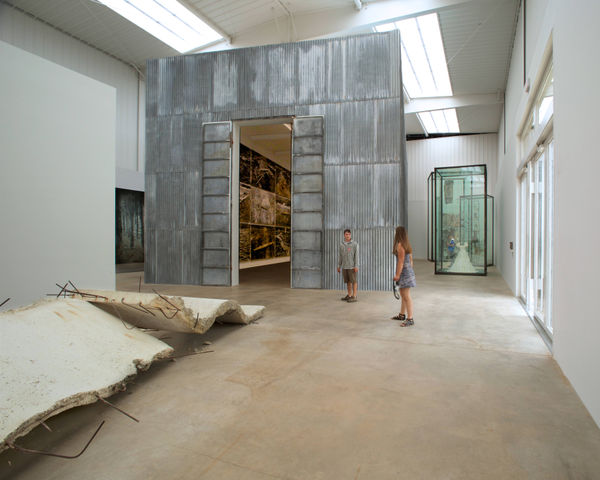
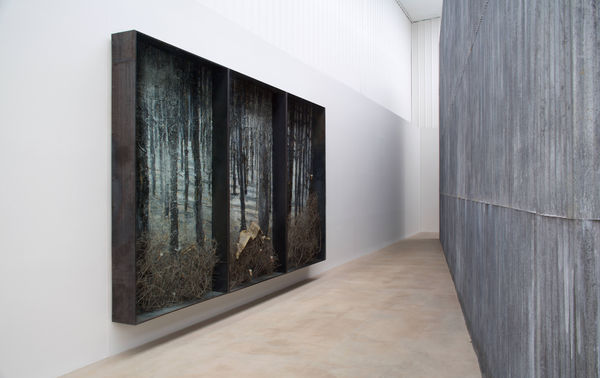
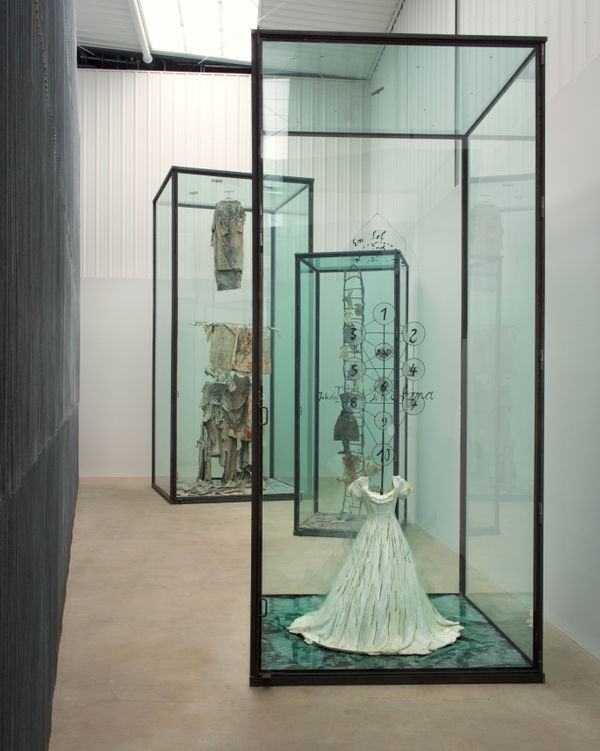
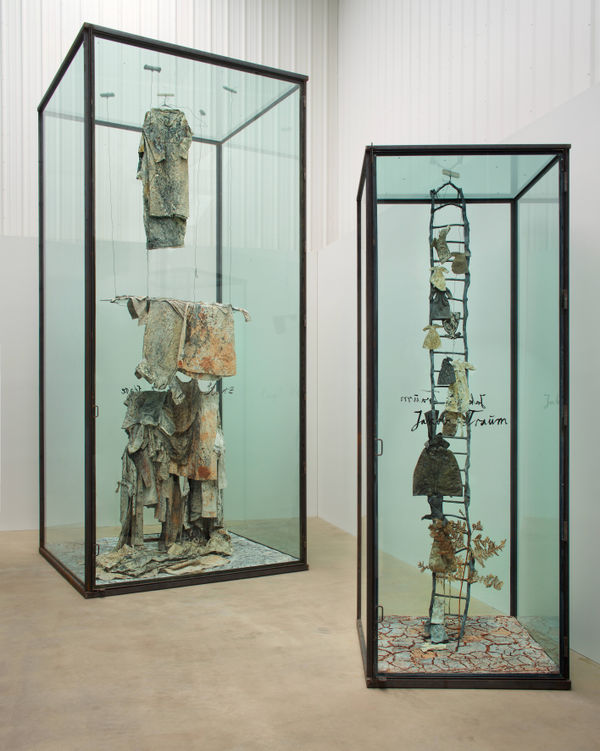
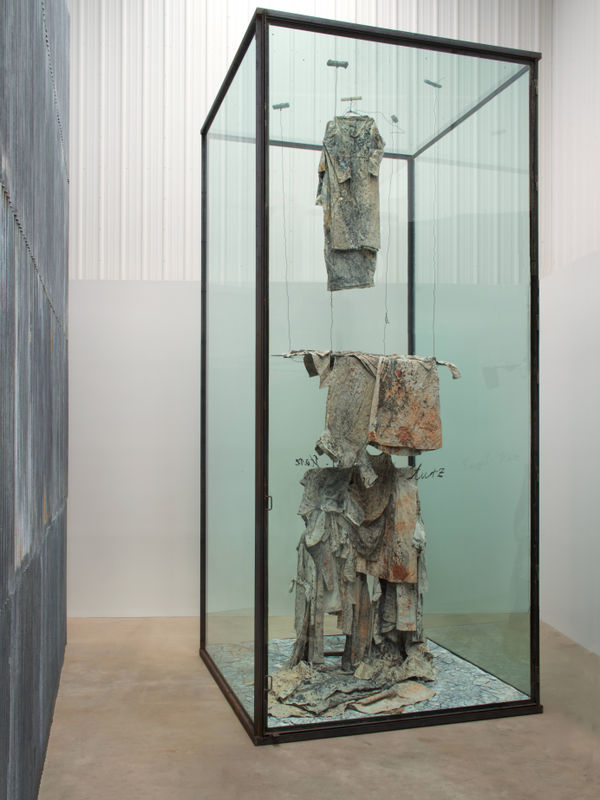
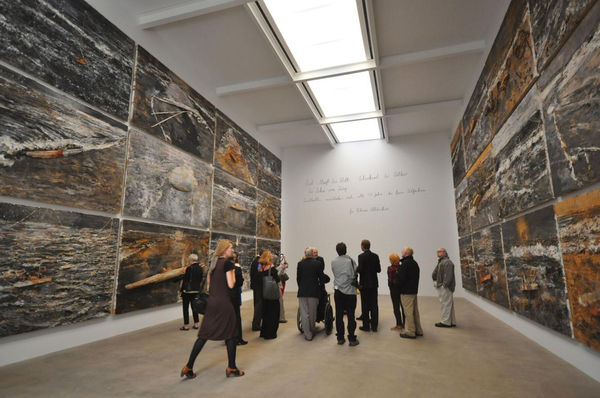
In a major new building and exhibition partnership with MASS MoCA, in September of 2013 the Hall Art Foundation opened a long-term installation of sculpture and paintings by Anselm Kiefer in a specially repurposed, 10,000 square-foot building at MASS MoCA.
-
Information
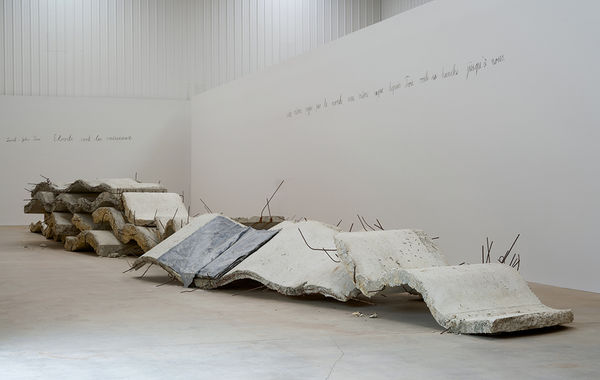
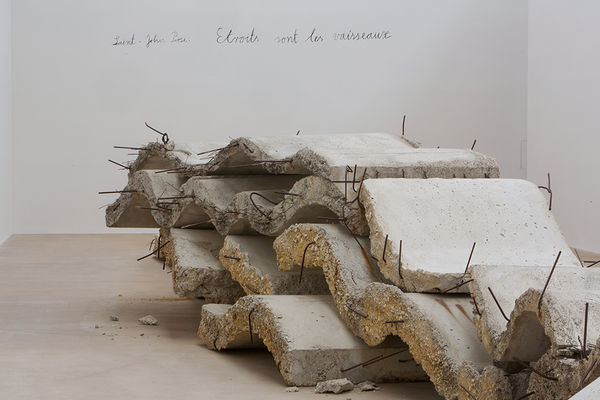
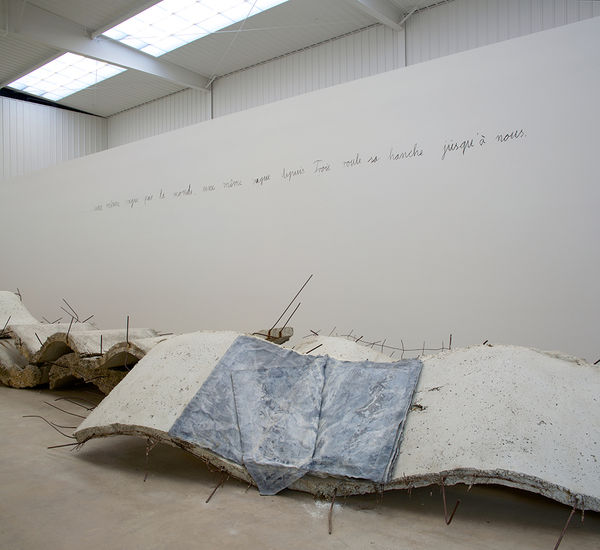
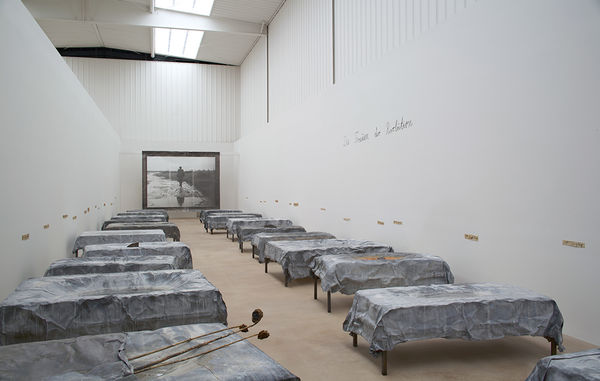
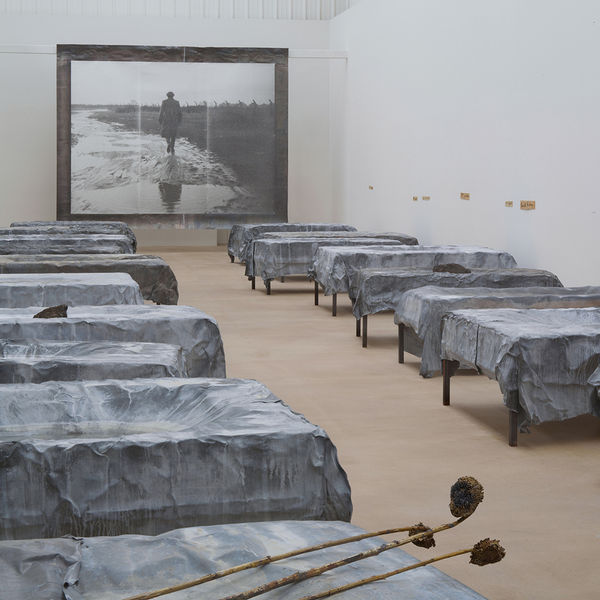
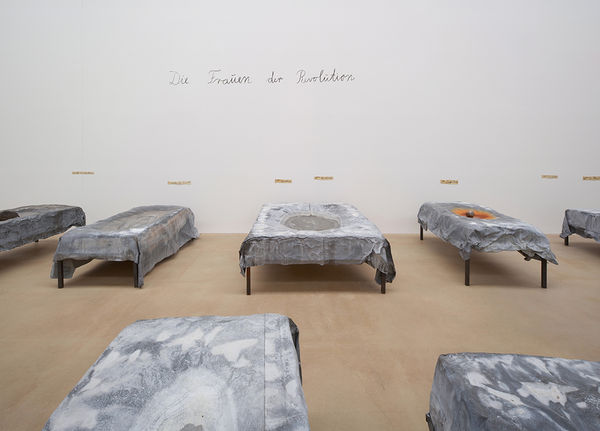
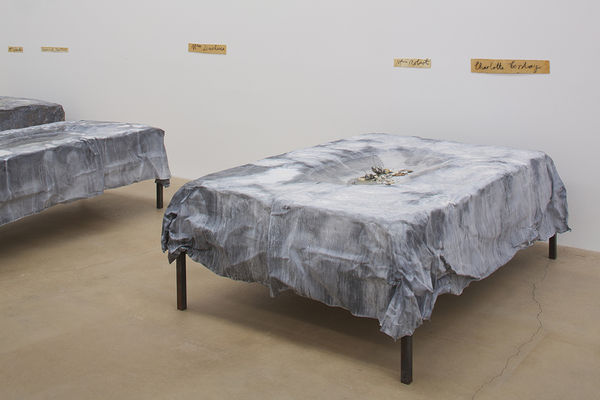
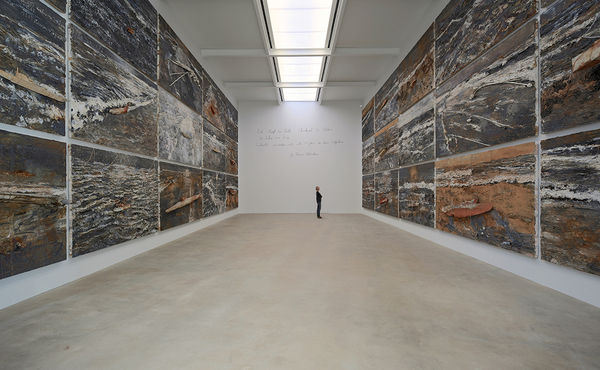
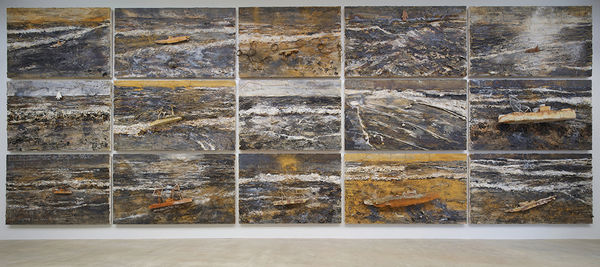
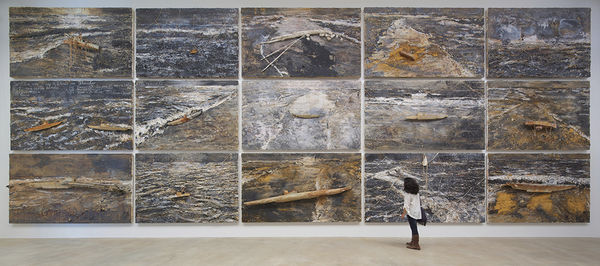
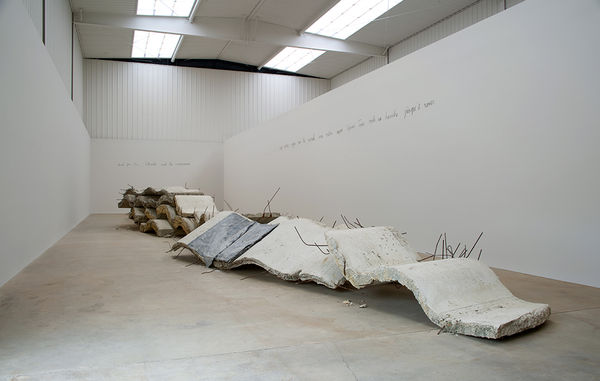
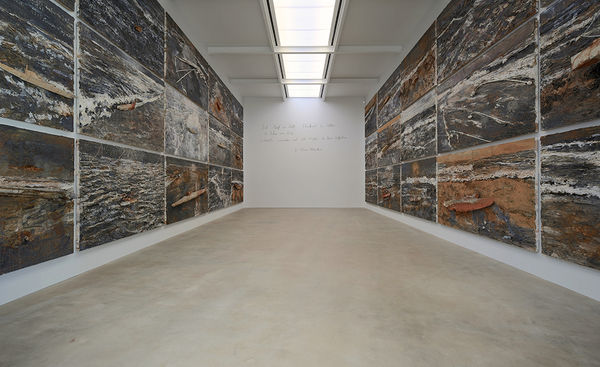
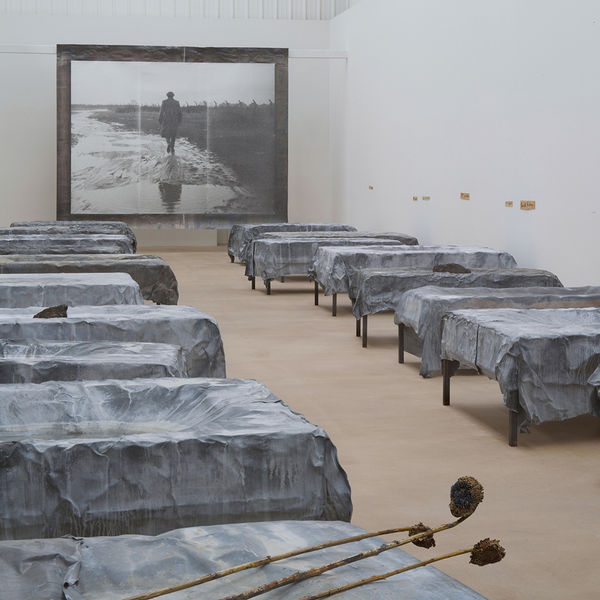
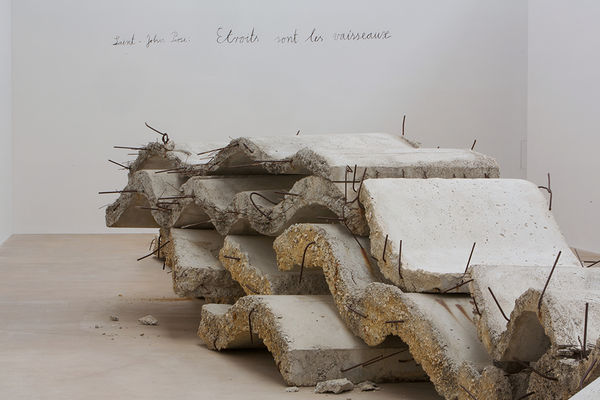
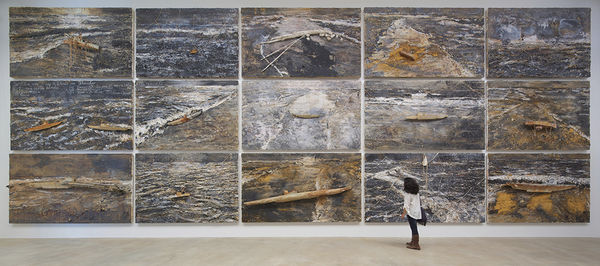
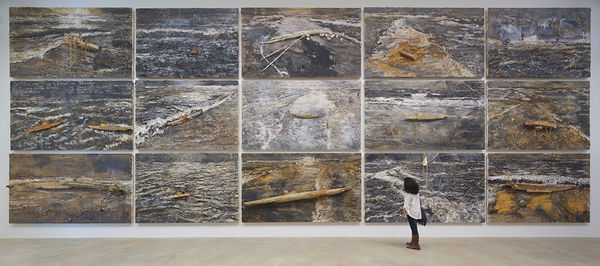
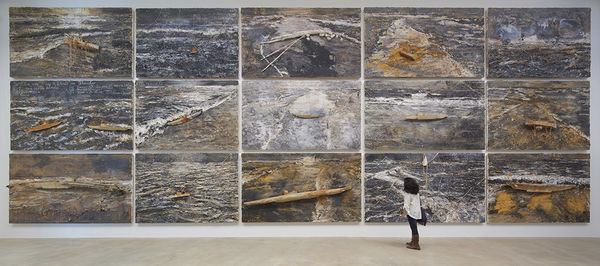
The exhibition includes Étroits sont les Vaisseaux (Narrow are the Vessels), (2002), an 82-foot long, undulating wave-like sculpture made of cast concrete, exposed rebar, and lead; The Women of the Revolution (Les Femmes de la Révolution) (1992/2013), comprised of more than twenty lead beds and a large-scale lead sheet with photograph; and Velimir Chlebnikov (2004), a 1,000 square-foot steel pavilion containing 30 paintings that deal with nautical warfare and are inspired by the quixotic theories of the Russian mathematical experimentalist Velimir Chlebnikov.
Anselm Kiefer, who first visited MASS MoCA in 1990 when it was still in the early planning stages, ranks among the best-known and most important of post-World War II German artists living and working today. Born in 1945 in southern Germany during the final days of the collapse of the Third Reich, Kiefer experienced divided postwar Germany firsthand. Across his body of work, Kiefer argues with history, addressing controversial and even taboo issues from recent history with bold directness and lyricism. Kiefer often turns to literature and history as prime source material for his work, as he did, for example, in the suite of paintings that comprise Velimir Chlebnikov (2004).
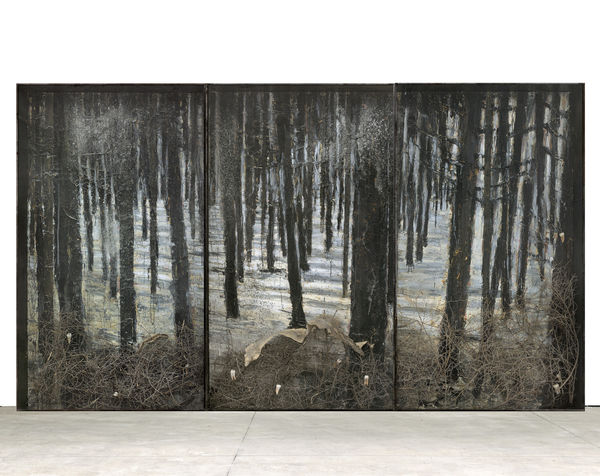
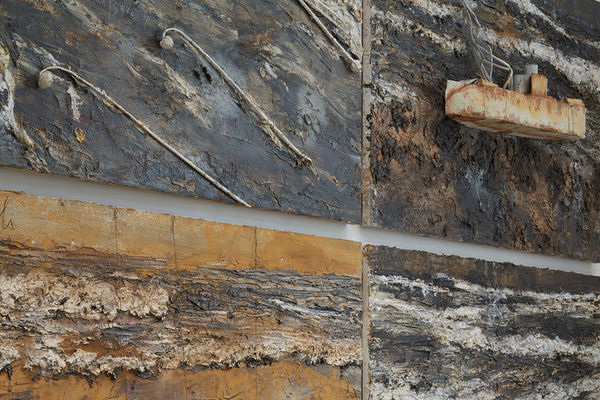
Kiefer's works are often realized in large formats, which in turn demand special exhibition spaces (as is the case in the current installation). The artist often builds his imagery on top of photographs, layering his massive canvases with dirt, lead, straw, and other materials that generate a "ground" that reads literally of the earth itself. Within these thick, impastoed surfaces Kiefer embeds textual or symbolic references to historic figures or places: these become encoded signals through which Kiefer invokes and processes history.
A law student, Kiefer switched his studies to art in 1965 and held his first solo exhibit in 1969. During the early 1970s he studied with conceptual artist Joseph Beuys, whose interest in using an array of cultural myths, metaphors, and personal symbolic vocabulary as a means to engage and understand history inspired Kiefer. The artist has described his own art-making process as stimulated by Beuys' philosophies: "Painting, for me, is not just about creating an illusion. I don't paint to present an image of something. I paint only when I have received an apparition, a shock, when I want to transform something. Something that possesses me, and from which I have to deliver myself. Something I need to transform, to metabolize, and which gives me a reason to paint."
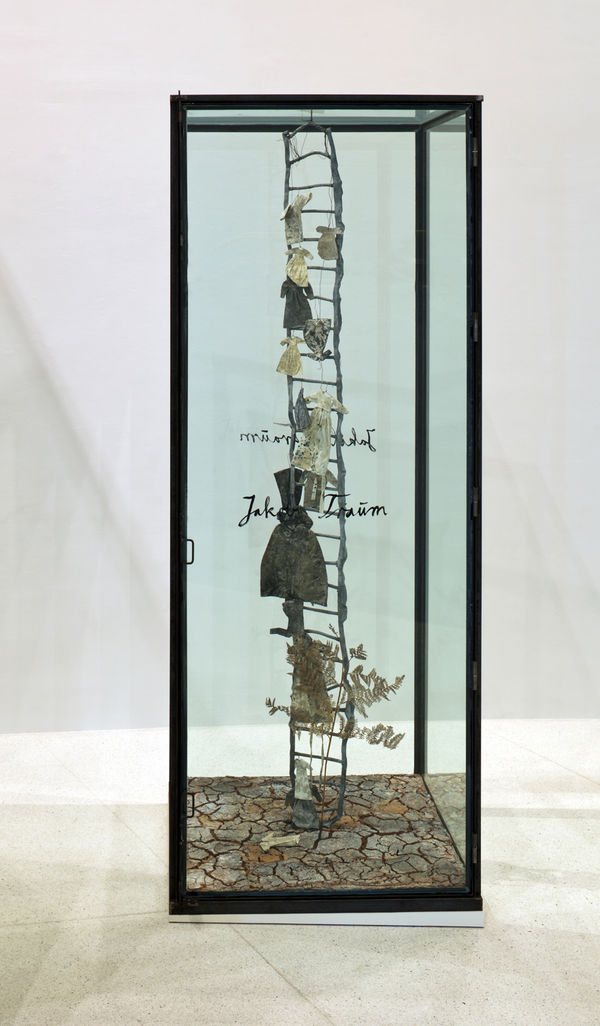
Like Beuys, whose works were often constructed of fragile, organic materials (including blood, fat, and honey), Kiefer's works often incorporate unusual, fugitive materials such as ash, clay, and dried plant materials. With their rough-hewn textures and expansive narrative formats that often evoke charred landscape and historical, sometimes apocalyptic settings, Kiefer's work did not conform to the pared-down Minimalist or Conceptualist movements that were becoming mainstream at the time he was a student. Instead he created massive, dark paintings, books constructed of large sheets of lead, and figurative works that explored German folklore and were inspired by Caspar David Friedrich, among others. Poetry (especially the work of Paul Celan and Ingeborg Bachman) has played a key role in shaping Kiefer's themes of German history and the horror of the Holocaust, as have the theological concepts of Kabbalah. In addition to paintings, Kiefer also produces drawings, watercolors, object-filled vitrines, woodcuts, and theatrical set designs for the stage.
After establishing large studio practices in Germany and then Barjac (in the south of France), Kiefer now lives and works primarily in Paris. His 2007 commission by the Louvre for the monumental stairwell connecting its Egyptian and Mesopotamian antiquity galleries was the first permanent installation there by a living artist since the 1953 commission of three ceiling panels by Georges Braque. Recent exhibitions include a large retrospective which traveled to the Modern Art Museum of Fort Worth, the Musée d'art Contemporain de Montréal, the Hirshhorn Museum and Sculpture Garden, Washington, D.C., and the San Francisco Museum of Modern Art. In 2007, Kiefer was commissioned to create a site-specific installation of sculptures and paintings for the inaugural "Monumenta" at the Grand Palais, Paris.
"We may well rotate or augment this initial installation from time to time," says Andrew Hall. "We've enjoyed working closely with Anselm and his studio on the content and design of this particular iteration, and look forward to other possibilities."
The Hall Art Foundation at MASS MoCA is open seasonally, with opening hours that align with other MASS MoCA galleries (11am-5pm daily, except Tuesdays).
Please visit MASS MoCA's website for further information
-
-
Installation Views
-
-
Artworks
-
Press
-

The Paris Review
Ruins in Advance April 4, 2017Revisited is a series in which writers look back on a work of art they first encountered long ago. Here, Kyle Chayka revisits Anselm Kiefer's Velimir Chlebnikov. -
Hyperallergic
Coming Back to Kiefer October 17, 2015NORTH ADAMS, Mass. - Nearly eight years ago I wrote a review leading off with the question, 'What is it about Anselm Kiefer's art that inhibits unfettered admiration?' -
The Financial Times
Massachusetts Museum of Contemporary Art, North Adams, Massachusetts August 31, 2015Nearly two dozen different exhibitions fill the museum's galleries, a superabundance of art -
Artes Magazine
Mass MoCA and Anselm Kiefer: Agony’s Chapel June 11, 2015The wreckage is confined as if it were a crime scene display, solitary in a warehouse, awaiting the jury's visit. This the antechamber to the installation of work by Anselm... -
THEARTERY
If You’re Traveling In The North Country: From Williamstown To MASS MoCA August 14, 2014West's 'Les Pommes d'Adam' lines one of the streets in the MASS MoCA complex down the road from Williamstown in North Adams. -
Charles Saumarez Smith
MASS MoCA August 14, 2014We headed out west along the Mohawk Trail through the hills and valleys of western Massachusetts to the Berkshires, stopping only for a hermit and ice cream at a junk... -
The Boston Globe
Kiefer conjures history, irony, and myth at Mass MoCA July 19, 2014 -
National Public Radio
Kiefer's Bleak Horrors Of War Fill An Entire Building November 23, 2013Anselm Kiefer was born in 1945, in the Black Forest of southwest Germany, just as the Third Reich was collapsing. -
The Wall Street Journal
A New Art Partnership October 15, 2013 -
Art in America Magazine
New Anselm Kiefer Building Opens at MASS MoCA October 4, 2013Formerly displayed on a Connecticut waterfront estate, a major work by Anselm Kiefer is now on view at a Massachusetts museum, where it will remain for over a decade. -
The Berkshire Eagle
Art collector Andrew Hall discusses Anselm Kiefer exhibit at Mass MoCA September 27, 2013 -
North Adams Transcript
MASS MoCA opens building dedicated to Anselm Kiefer's Art September 27, 2013 -
Rural Intelligence
A Palace of Memory: Anselm Kiefer Invades MASS MoCA September 23, 2013 -
New England Public Radio
From filtration plant to art gallery, MASS MoCA renovates unused building to house its large new show August 8, 2013 -
The New York Times
Anselm Kiefer Coming to Mass MoCA July 12, 2013The Massachusetts Museum of Contemporary Art, or Mass MoCA as it's more popularly called, has something urban museums and art galleries do not: space and plenty of it.
-
-
Publications
-
Installation views: Arthur Evans
-
Custom dates
Open Seasonally