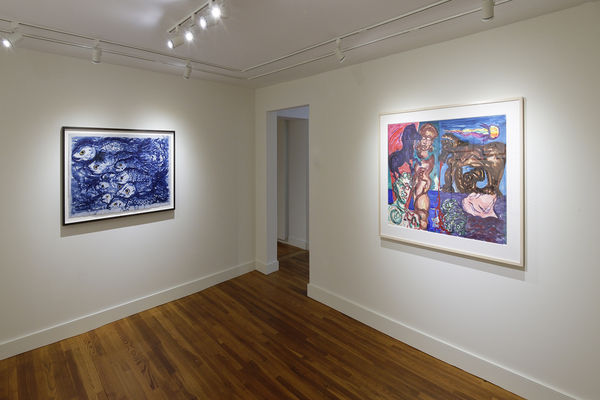
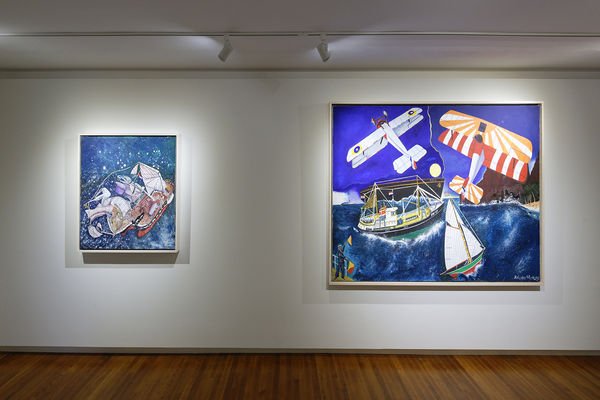
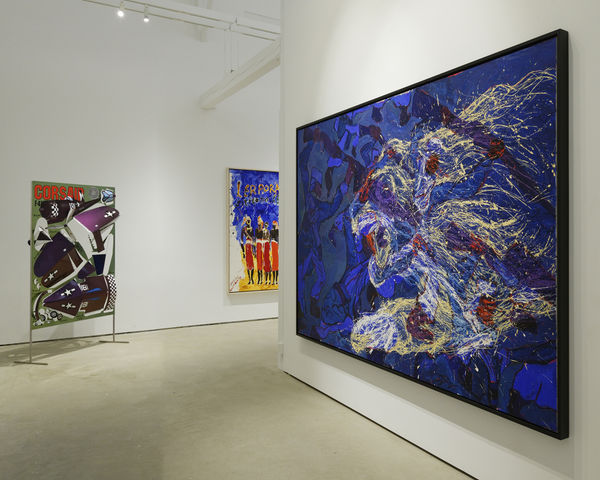
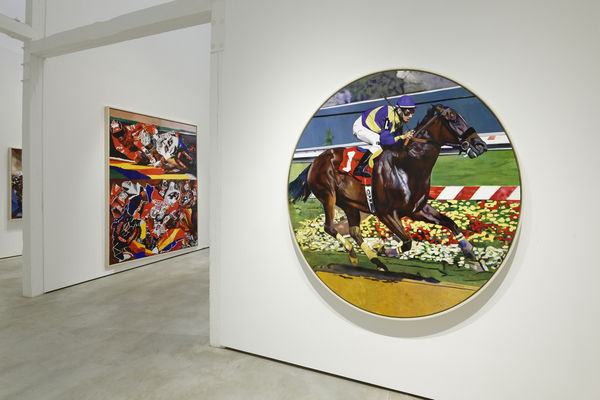
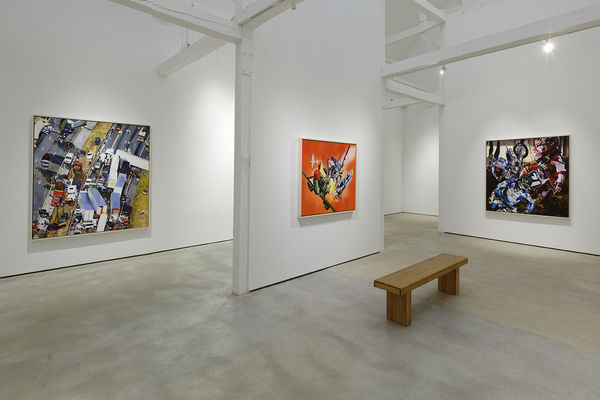
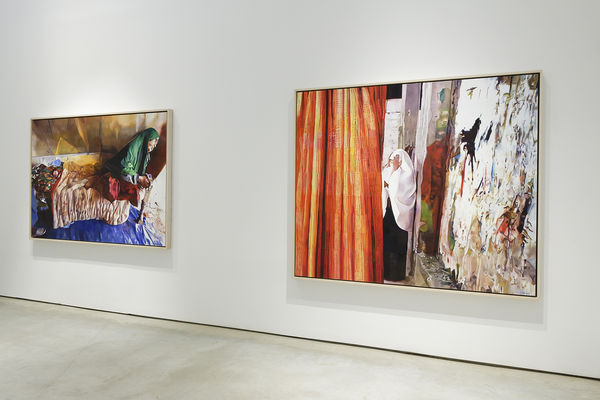
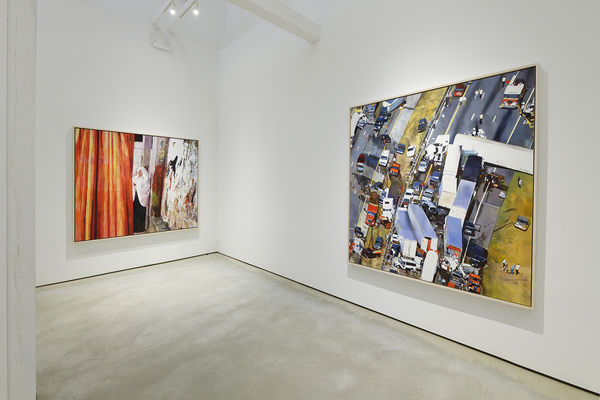
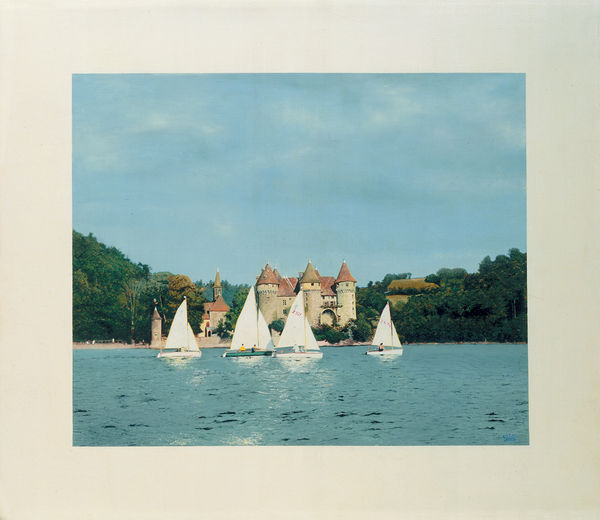
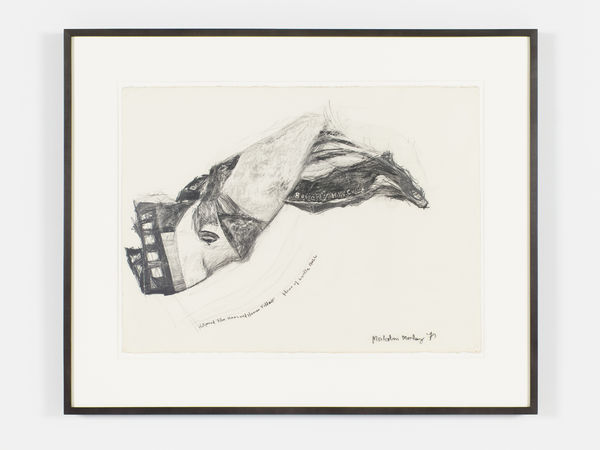
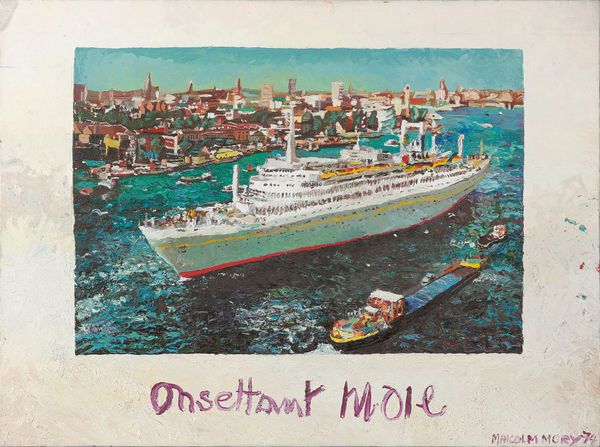
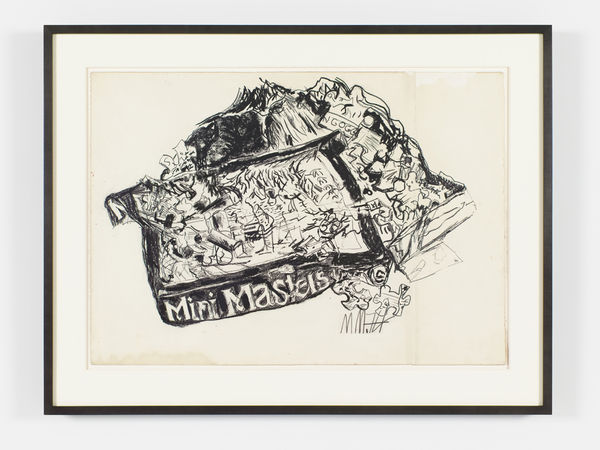
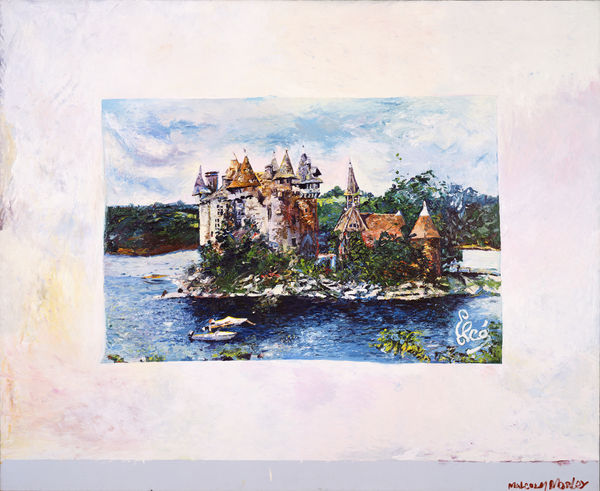
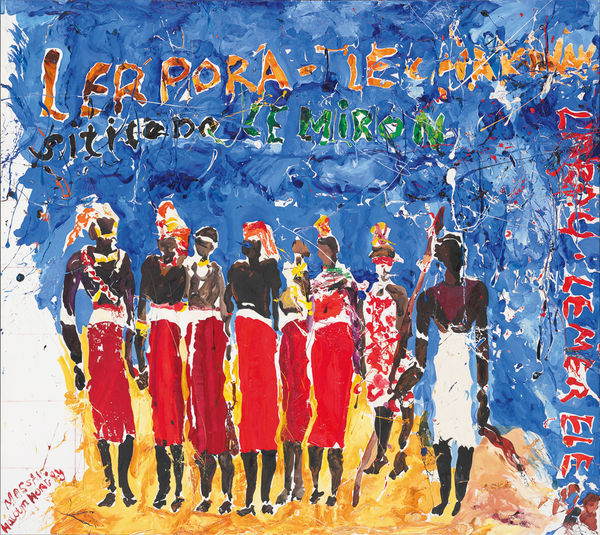
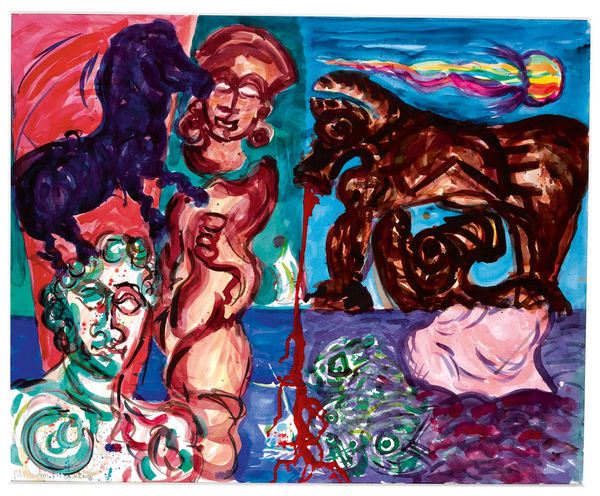
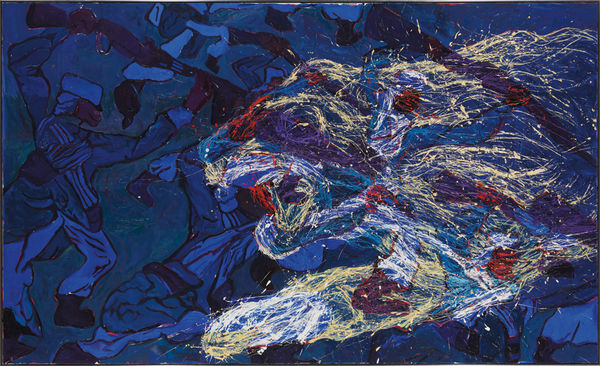
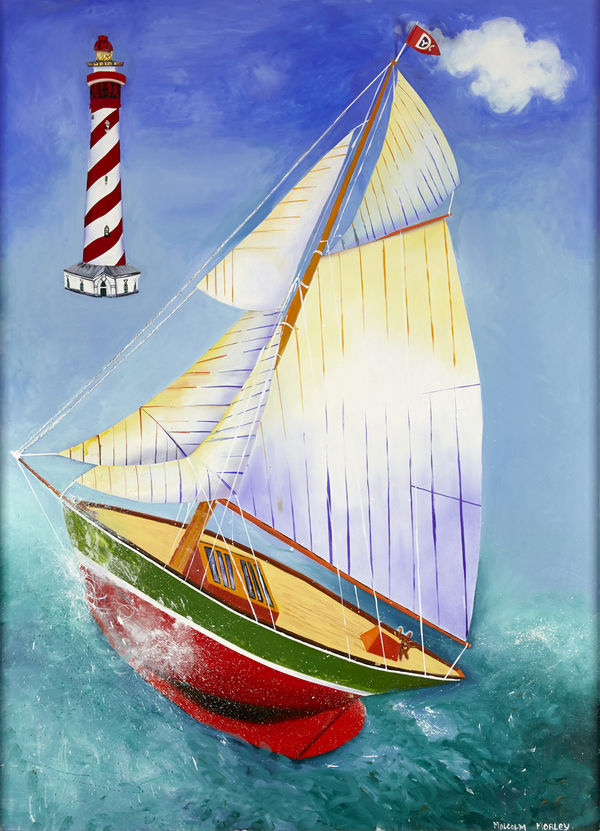
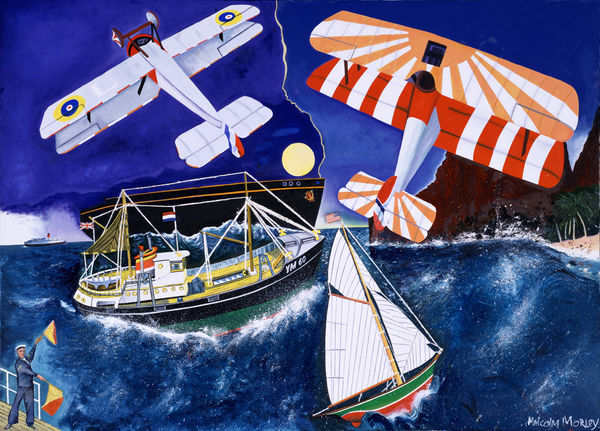
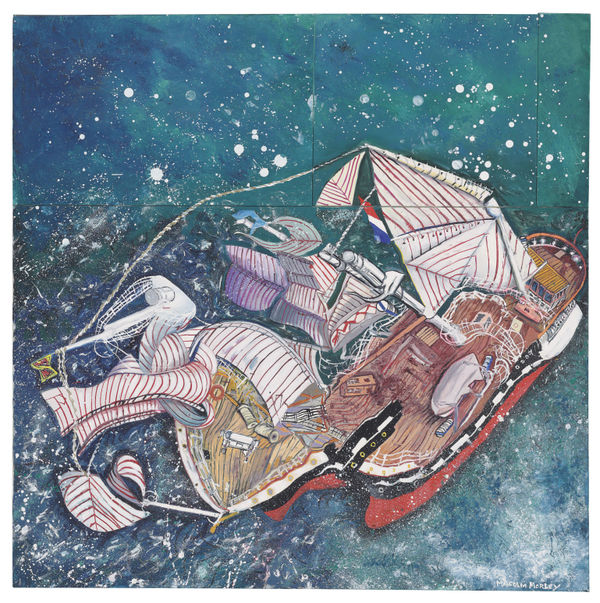
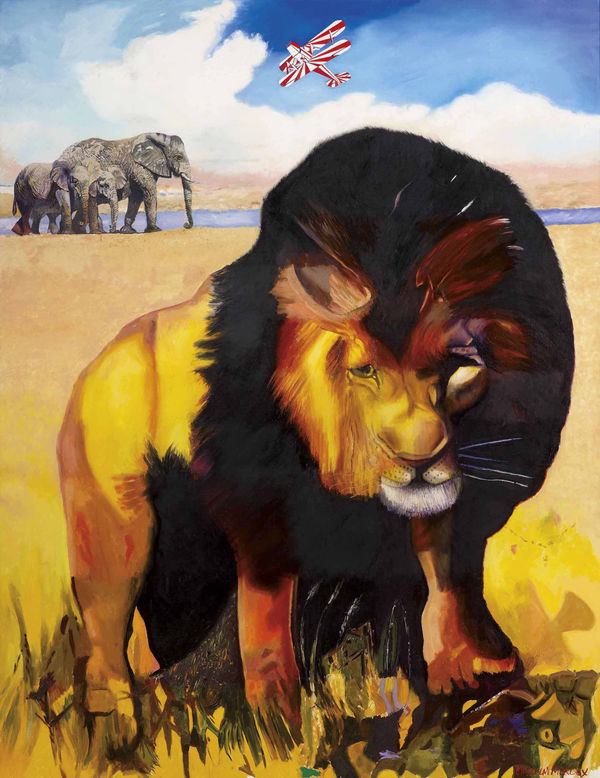
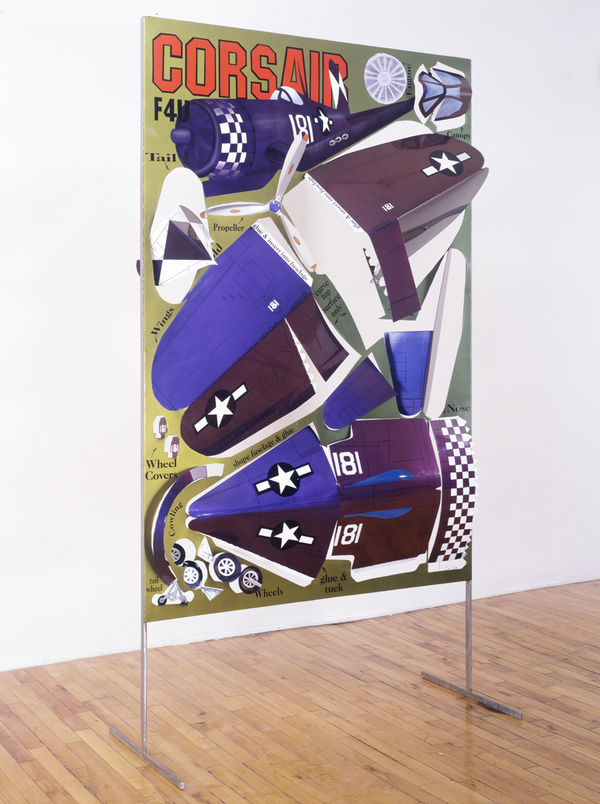
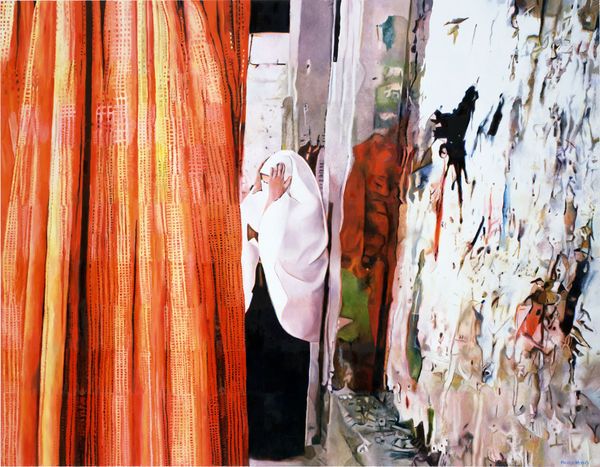
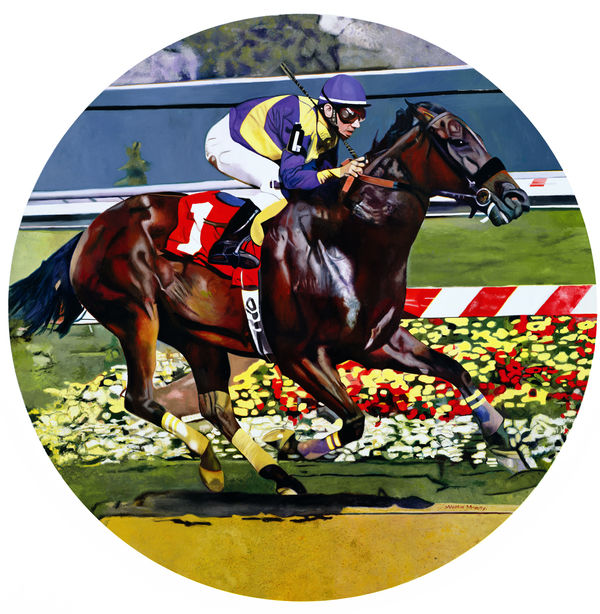
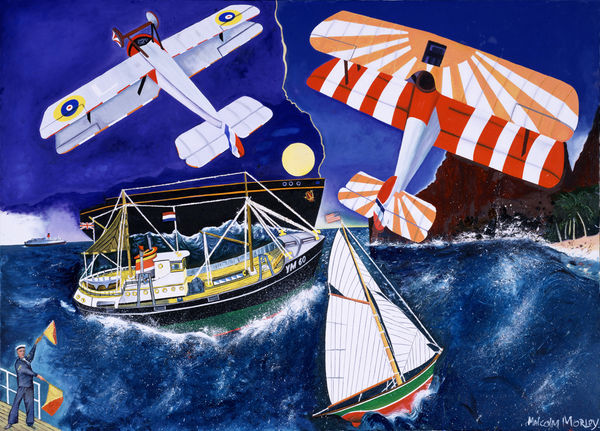
Hailed internationally as a pioneering figure of his generation, British-born American artist Malcolm Morley was a founder of Super-Realism, which developed as a counterpoint to Pop Art in the 1960s. He is also remembered as an artist who deliberately broke away from the stylistic innovations which brought him this initial fame. Over a career spanning sixty years, Morley's practice continually evolved, his paintings becoming ever more colorful, expressive and distinctive. This exhibition includes approximately 40 paintings, sculptures and works on paper created between 1964 and 2016 from the Hall and Hall Art Foundation collections.
INFORMATION
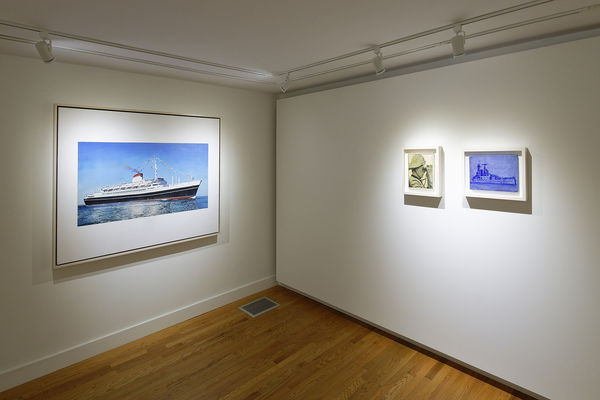
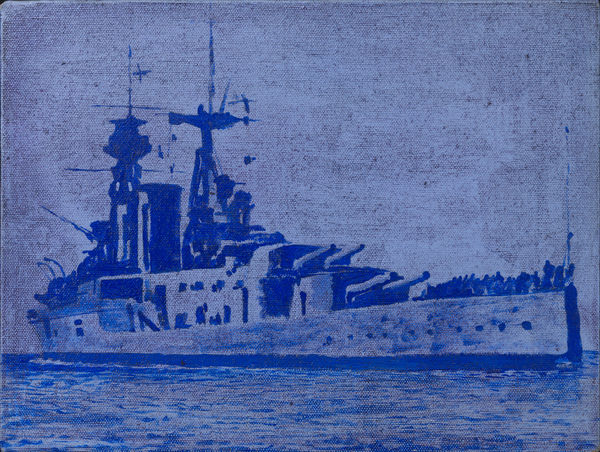
Malcolm Morley, HMS Hood, 1964
Born and trained in England, Morley moved to the United States in 1958, where he devised a wry form of realism that utilized found photographic material with vernacular subject matter. HMS Hood (1964) replicates a photograph in a style mimicking that of a newspaper print.
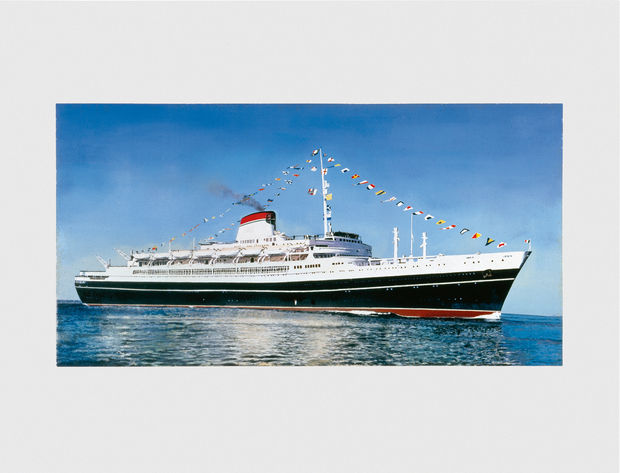
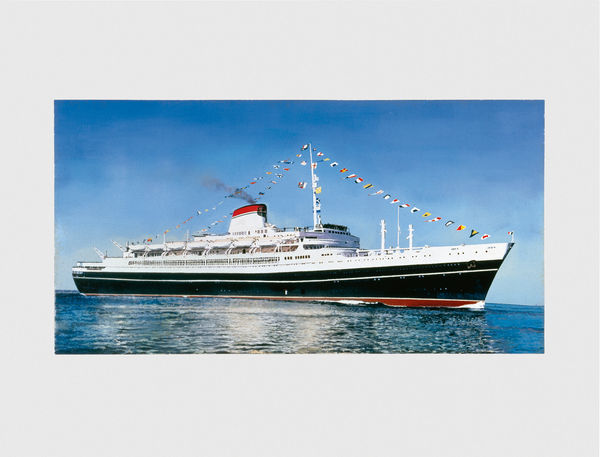
Malcolm Morley, Cristoforo Colombo, 1965
In Cristoforo Colombo (1965), a painted white border around the image of the ocean liner affirms that the subject of Morley’s painting is a postcard of the ship rather than the ship itself. In the 1970s, the crisp Super-Realist structure of Morley’s paintings loosens and his brushwork becomes more visible and expressive.
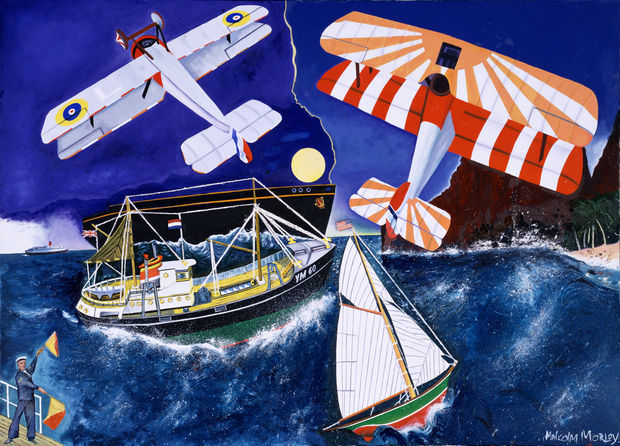
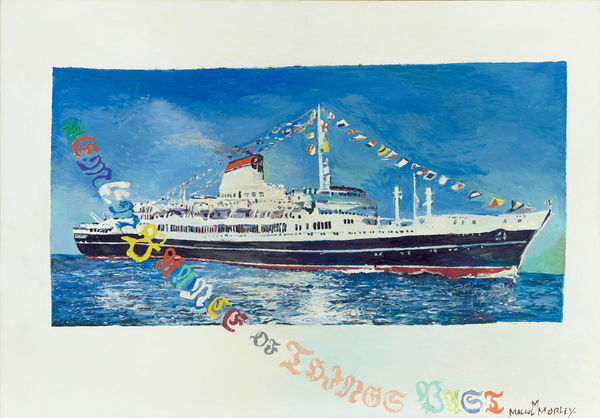
Malcolm Morley, Remembrance of Things Past, 1976
Remembrance of Things Past (1976) is a later take on Cristoforo Colombo in this more painterly style, and includes a garland of painted text tumbling out of the composition into the painted border.
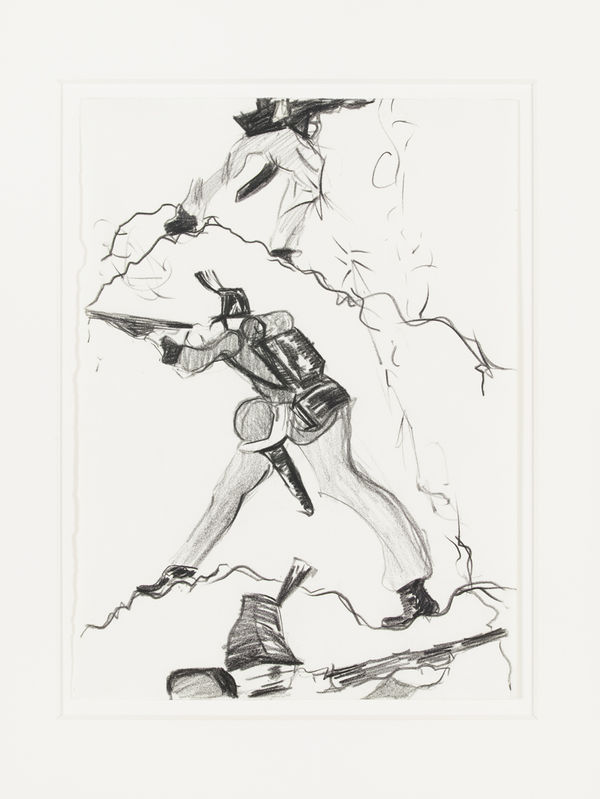
Malcolm Morley, French Foreign Legionnaires Being Eaten by a Lion in the Sahara Desert, 1986
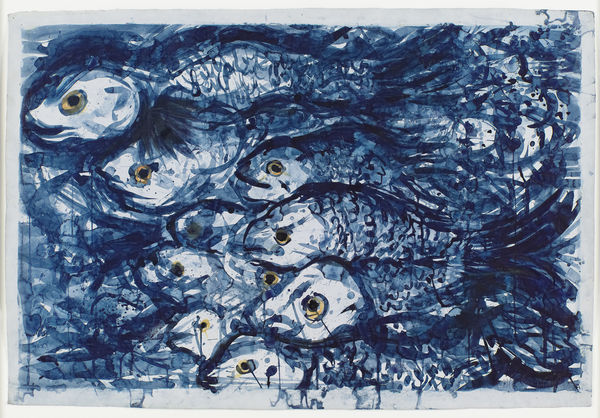
Morley’s use of wide-ranging source material to produce compositions with complex effects of flatness and depth informs his work across the decades. In the 1980s, loose, colorful and energetic paint handling often depicts exotic animals, birds and fish. In French Foreign Legionnaires Being Eaten by a Lion in the Sahara Desert (1986), the soldiers’ dark, flattened forms recede behind the vigorous, bright paint splatters of the charging lion.
Malcolm Morley, Man Overboard, 1994
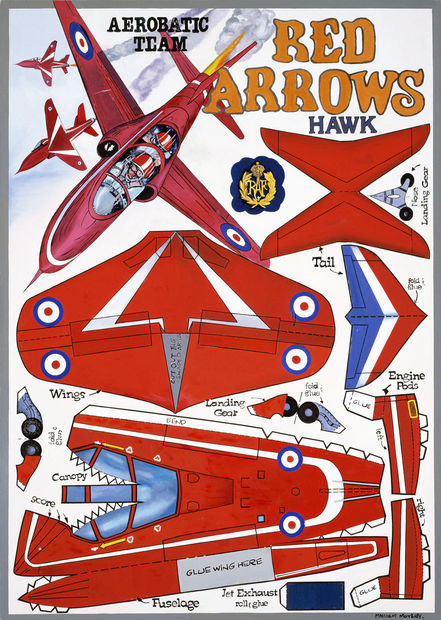
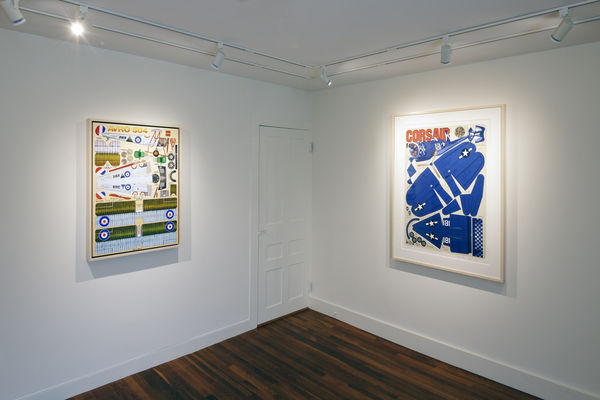
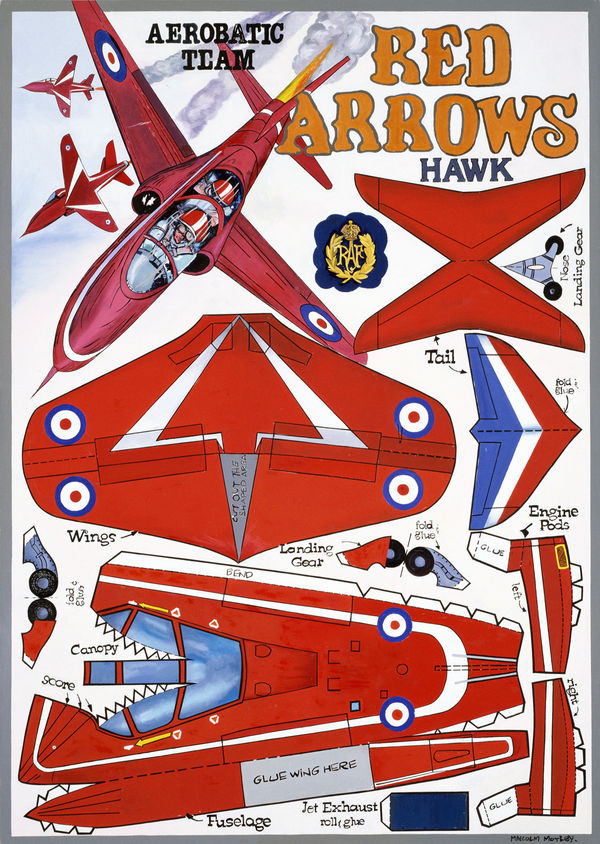
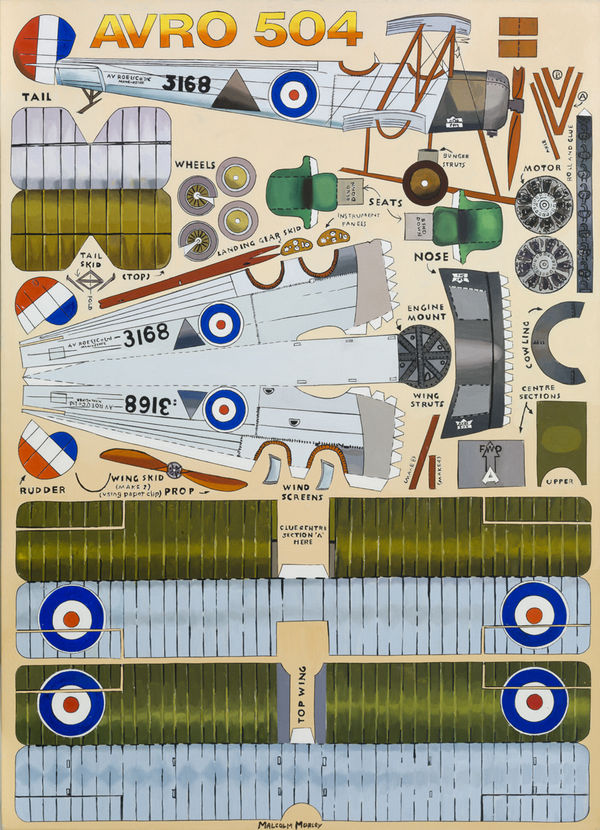
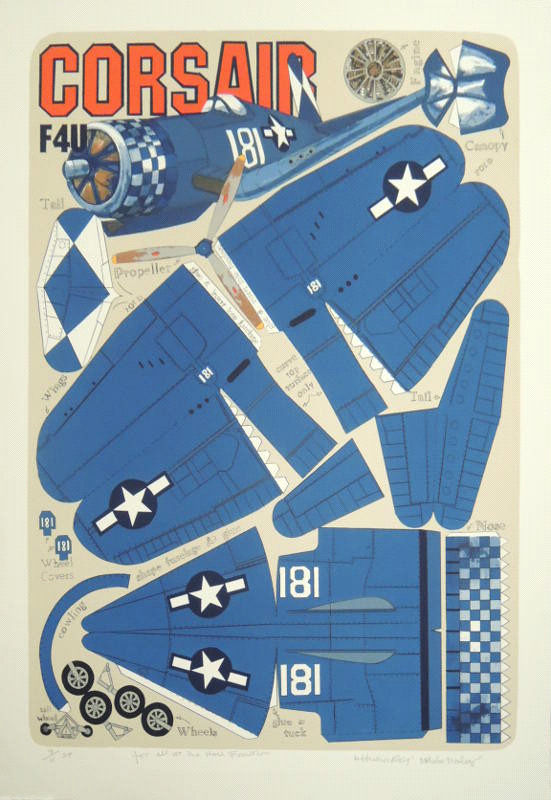
In the early 1990s, paper models hand painted with watercolor became the source material for Morley’s compositions, and in some cases would be attached directly to the surface of the canvas. In Man Overboard (1994), three watercolor-on-paper flags, affixed to the surface of the canvas, curiously recede from the foreground, where two painted flags signal “man overboard.”
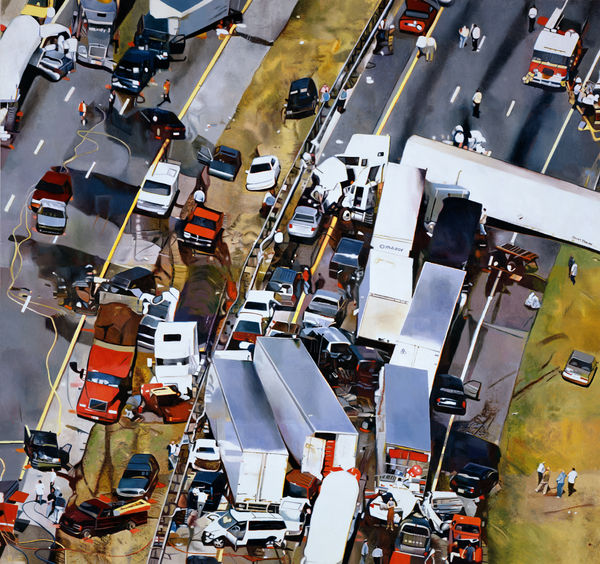
Malcolm Morley, Theory of Catastrophe, 2004
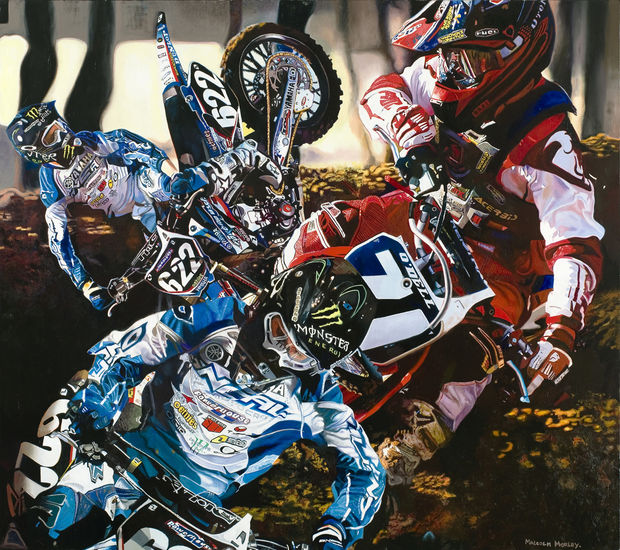
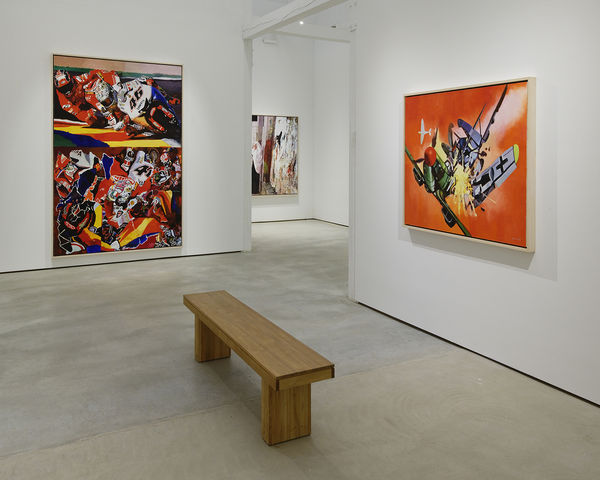
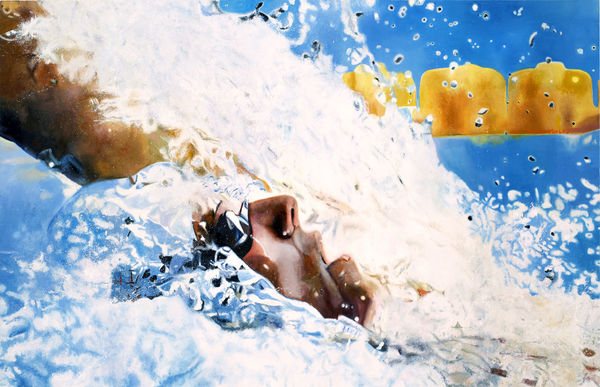
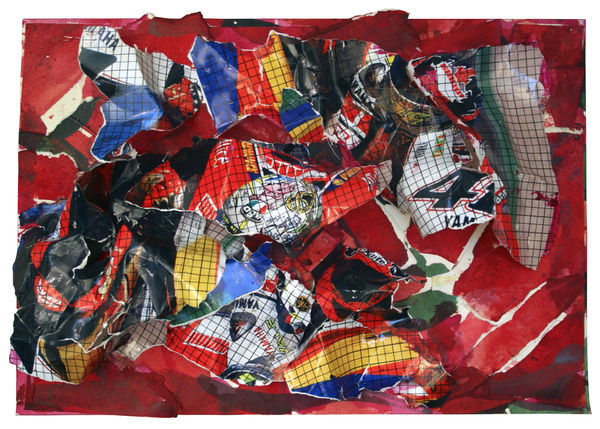
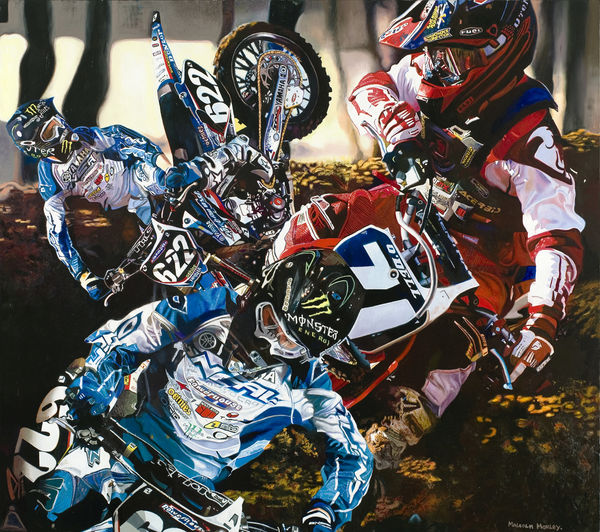
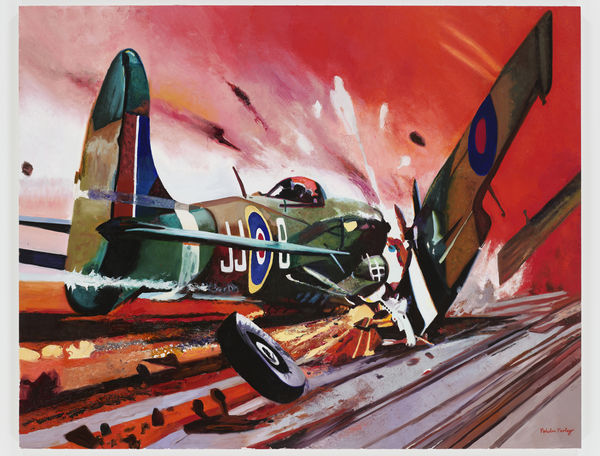
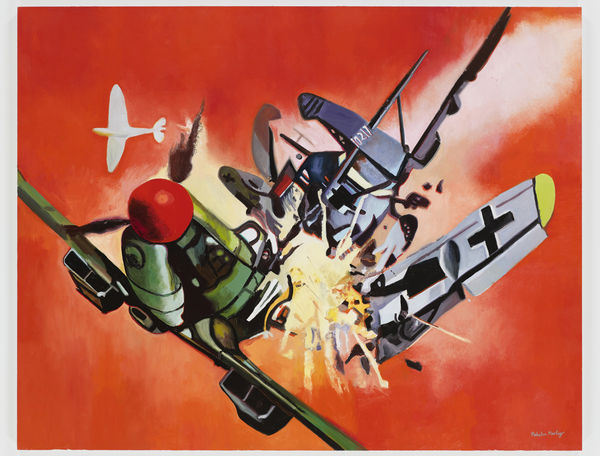
Theory of Catastrophe (2004) and Monster Energy (2007) belong to a group of work whose slick imagery derives from magazine and newspaper photos of figures from the contemporary sports world and catastrophes.
Malcolm Morley, Monster Energy, 2007
In Monster Energy, Morley presents the figure of an athlete as a mythic hero.
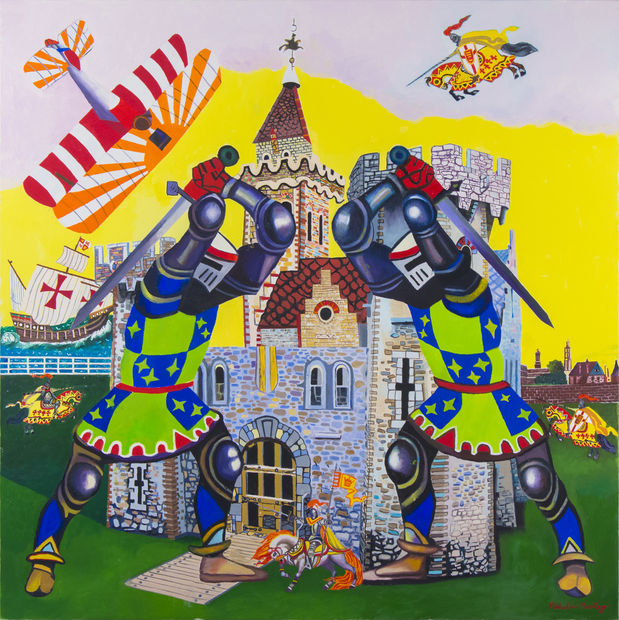
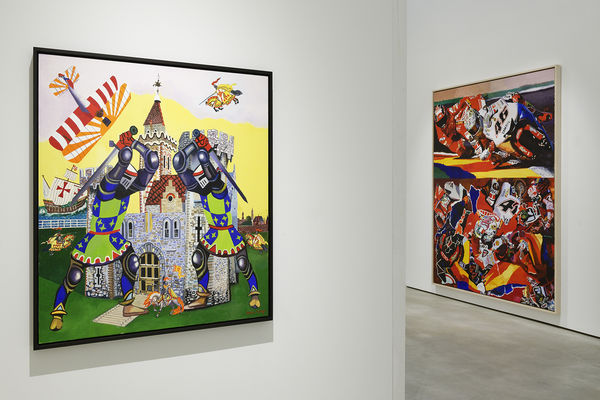
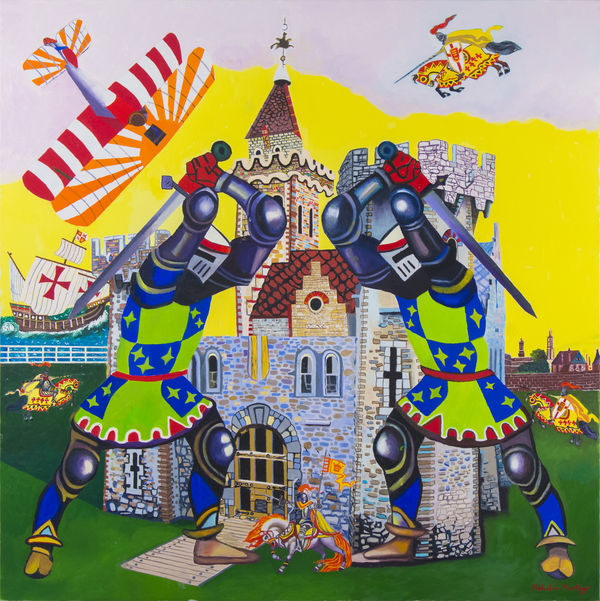
Malcolm Morley, Medieval Divided Self, 2016
In his last series, Morley presented vibrant, often anachronistic scenes of medieval knights engaged in battle. In Medieval Divided Self (2016), which features a World War I biplane alongside a 16th-century Spanish galleon, symbols from different historical periods collide. In these latest paintings, Morley continued his thirty-year tradition of using models as his source material, forging unexpected relationships between often-incongruous objects.
Malcolm Morley, Red Arrows, 2000
Malcolm Morley (b. 1931, London) studied at the Camberwell School of Arts and Crafts and the Royal College of Art. Since his first show in New York in 1964, he has had numerous exhibitions in Europe and North America and has participated in many international surveys, including documenta5 (1977) and 6 (1977). In 1981, Morley's work was included in the Royal Academy's pivotal group exhibition, A New Spirit in Painting. His first retrospective was organized in 1983 by the Whitechapel Art Gallery, London, and travelled to the Museum of Contemporary Art, Chicago, and the Brooklyn Museum, New York. In 1984, Morley was awarded the first-ever Turner Prize. Subsequent noteworthy presentations of Morley's work include an exhibition of watercolors at Tate Liverpool, which travelled to the Kunsthalle Basel, Bonnefantenmuseum in Maastricht, and the Parrish Art Museum in Southampton, NY (1991-92); a retrospective at the Musée national d'art moderne, Centre Georges Pompidou, Paris (1993); an exhibition organized by Fundación La Caixa, Madrid, which travelled to the Astrup Fearnley Museet, Oslo (1995-96); a retrospective at the Hayward Gallery, London (2001); and the survey "The Art of Painting" at the Museum of Contemporary Art, North Miami (2006). In 2012, the Yale School of Art, New Haven, Connecticut, presented Malcolm Morley in a Nutshell: The Fine Art of Painting 1954-2012, and the Parrish Art Museum, Water Mill, New York, mounted an exhibition exploring the important role of paper in Morley's art-making process.
In 2013, an exhibition curated by Sir Norman Rosenthal took place at the Ashmolean Museum, Oxford, in partnership with the Hall Art Foundation. The Hall Art Foundation subsequently presented an exhibition of Morley's work at its Schloss Derneburg location in 2017. His work can be found in museum collections worldwide. Morley lived and worked in Long Island, New York before his death in 2018 at the age of eighty-six.
Diese Website verwendet Cookies, um Ihnen eine bessere Benutzerfreundlichkeit zu bieten. Bitte kontaktieren Sie uns, um mehr über unsere Cookie-Richtlinie zu erfahren.
We will process the personal data you have supplied to communicate with you in accordance with our Datenschutz.
You can unsubscribe or change your preferences at any time by clicking the link in our emails.