A Farewell to the Western World

9 Mai - 29 November 2026 Vermont
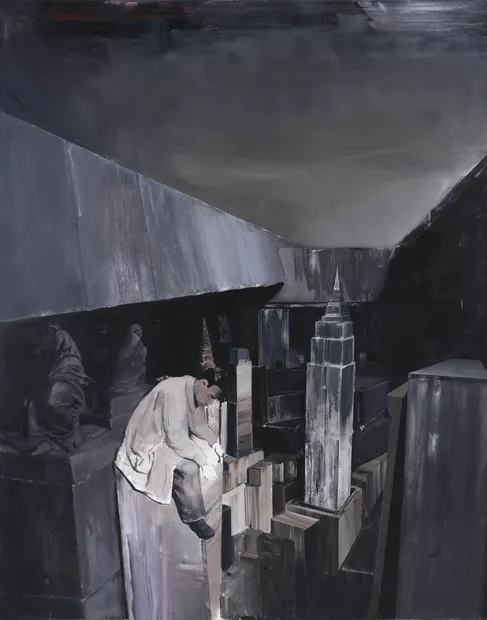
  • Adrian Ghenie, A Farewell to the Western World, 2007 (detail)
  • Borrowing its title from a painting by the acclaimed Romanian artist Adrian Ghenie, A Farewell to the Western World gathers approximately 70 artworks in painting, drawing, sculpture and photography that depict imagery suggestive of global shifts and an irreverence towards systems of established order.

  • Information

    The Hall Art Foundation is pleased to announce a group exhibition, A Farewell to the Western World, to be held in Reading, Vermont from 9 May - 29 November 2026. Borrowing its title from a painting by the acclaimed Romanian artist Adrian Ghenie, A Farewell to the Western World gathers approximately 70 artworks in painting, drawing, sculpture and photography that depict imagery suggestive of global shifts and an irreverence towards systems of established order. By tracing patterns of conflict, power, and sociopolitical upheaval that have concerned artists globally, A Farewell to the Western World questions established constructs like West versus East. As authoritarian tendencies last seen almost a century ago appear to be in ascendancy, assumptions of "history ending" and liberal democracy are similarly challenged. Although these often-stark images illustrate the consequences of their time, they underscore a humbling reminder that every generation determines its own reckoning.

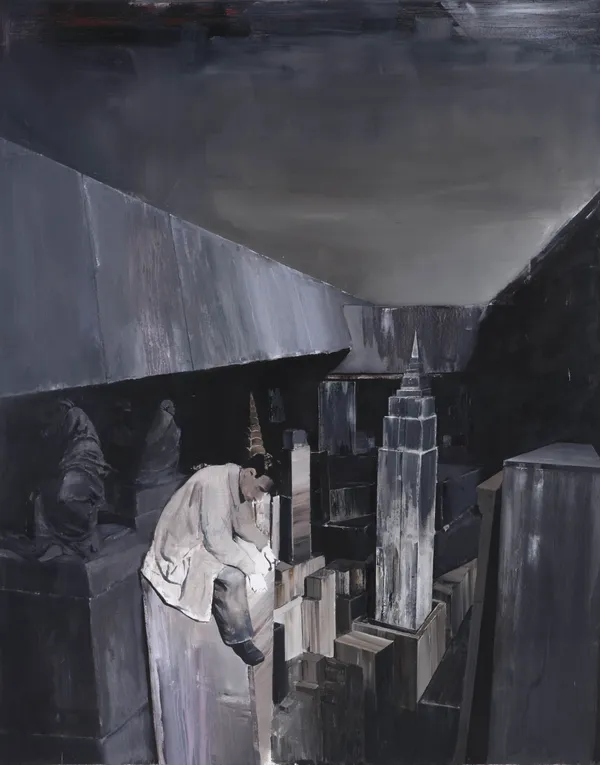
  • Ghenie's painting A Farewell to the Western World (2007) situates a white-clothed figure within a bunker, perched atop a miniaturized...

    Adrian Ghenie, A Farewell to the Western World, 2007


    Ghenie's painting A Farewell to the Western World (2007) situates a white-clothed figure within a bunker, perched atop a miniaturized version of the New York City skyline and Greco-Roman antiquities. The composition references an installation image from the 1939 New York World's Fair, an international presentation of cultural and technological innovations in which 62 nations participated. Ghenie's ominous interpretation painted in grisaille is perhaps a reflection of a post-Soviet Romania where the benefits of Western influence, in particular the promises of its governing and financial structures, were questioned.

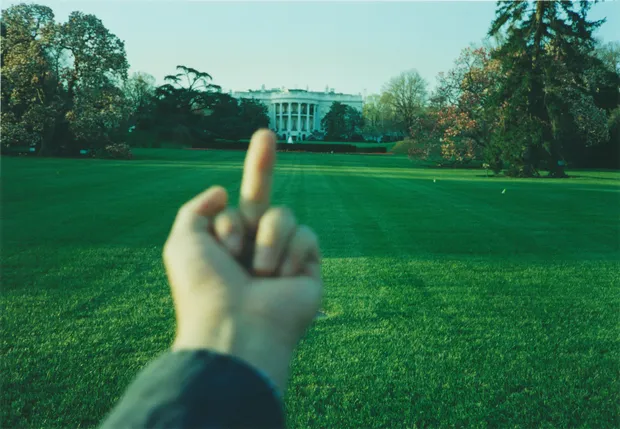
  • The artist Ai Weiwei similarly provokes symbols of power inherent to governing structures. From 1995 to 2003, Weiwei photographed himself...

    Ai Weiwei, Study of Perspective (White House), 1994-99

    The artist Ai Weiwei similarly provokes symbols of power inherent to governing structures. From 1995 to 2003, Weiwei photographed himself gesturing his middle finger towards buildings defined by their political influence, including the Basilica San Marco in Venice, the Reichstag in Berlin, the Red Square in Moscow, and Tiananmen Square in Beijing. In Study of Perspective (White House) (1994-1999), made during the Clinton Administration, Weiwei photographed his finger from a far vantage point, illustrating the diminished scale of the presidential building from across the great lawn.

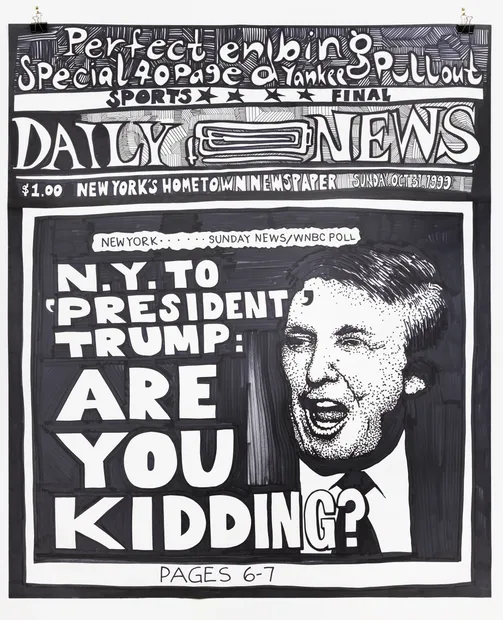
  • Collective perception through media coverage is a key aspect of Aleksandra Mir's work. In Mir's Newsroom series, the artist invited...

    Aleksandra Mir, Newsroom Revival: Are You Kidding, 2020

    Collective perception through media coverage is a key aspect of Aleksandra Mir's work. In Mir's Newsroom series, the artist invited others to use her archive of tabloid newspaper covers in the recreation of large-scale drawings. Reproduced only with black Sharpie marker, the covers' font, scale, and composition were dramatized by individual interpretation across trending themes like the weather, police activity, and celebrity. In 2020, Mir revived the series featuring headlines about Donald Trump that were published prior to his first campaign. Newsroom Revival: Are You Kidding (2020)is an example of Trump's unique ability to manipulate mainstream media attention, a method that has defined most authoritarian regimes around the world.

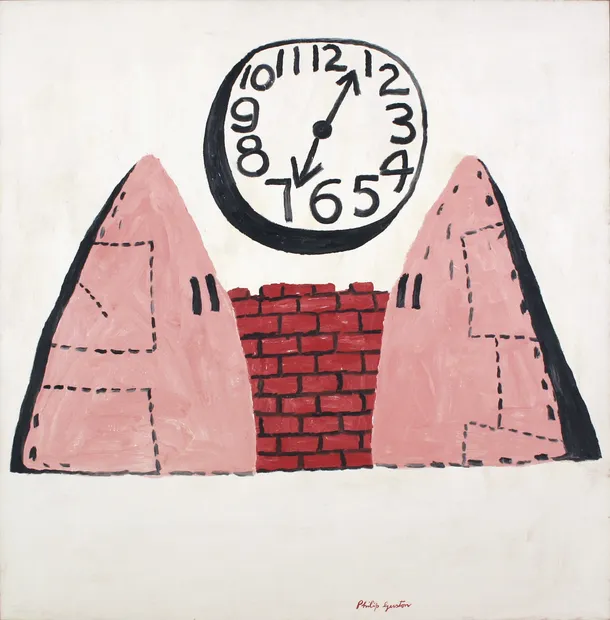
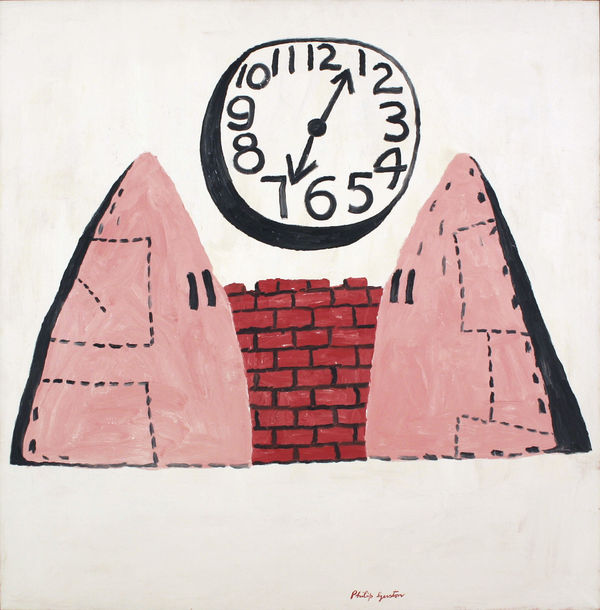
  • Painted decades earlier, Philip Guston's Courtyard (1969) centers two of his iconic hooded figures facing off under a clock in...

    Philip Guston, Courtyard, 1969

    Painted decades earlier, Philip Guston's Courtyard (1969) centers two of his iconic hooded figures facing off under a clock in a space defined only by a brick wall. Paired down to its simplest elements, Guston's narratives have been heralded for forefronting concerns of the Civil Rights Movement. His most celebrated compositions are founded in a politicized and historic return to figuration after a period of abstraction during the 1960s, recalling his earlier work producing murals for the Works Progress Administration, an agency created under President Roosevelt's New Deal. At a time of massive internal upheaval in the United States while under the shadow of the Vietnam War, Guston's work suggested that to combat inequality, its perpetrators had to be clearly identified.


    For more information and images, please contact the Hall Art Foundation's administrative office at info@hallartfoundation.org.


    DOWNLOAD PRESS RELEASE

  • Ai Weiwei, Study of Perspective (White House), 1994-99 (detail)
  • Artworks