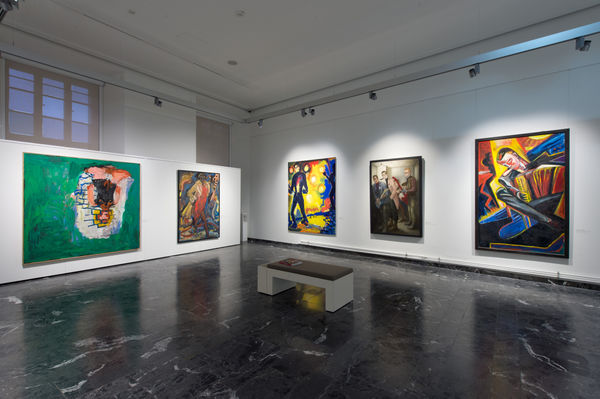
Die wilden 80er Jahre in der deutsch-deutschen Malerei : Potsdam Museum - Forum für Kunst und Geschichte, Potsdam, Germany
Rückblick exhibition
Information

The Berlin Wall increasingly became a symbol of East German isolation, but this by no means meant that artistic trends from the other state were not perceived or adopted. For example, a flourishing of figurative art can be observed in both states during the 1980s.
Above all, the younger generation of artists on both sides of the Wall rejected the established, or rather, the politically prescribed canon of forms and expression. In East Germany, it was the struggle against Socialist Realism. In West Germany, they rebelled against what had come before: Pop Art, Minimalism, and Conceptual Art. Surprisingly, in the divided German states at this time, the individual personality, the self, moved to the center of artistic interest.
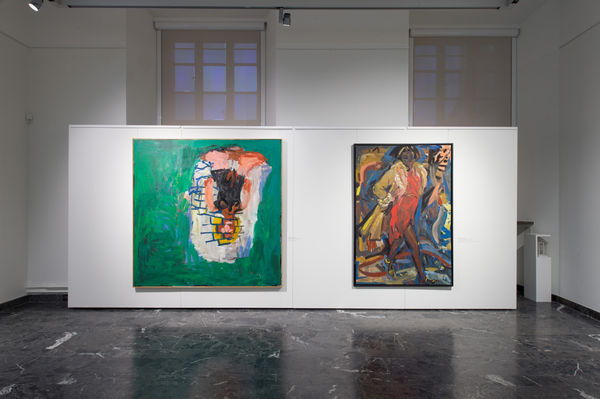
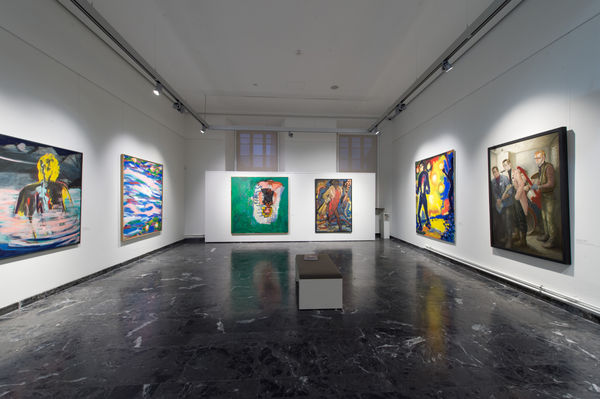
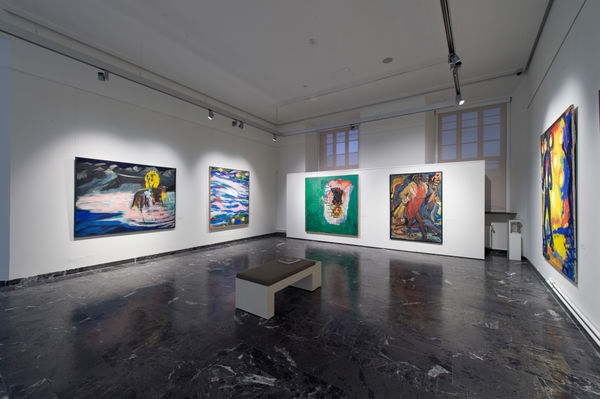
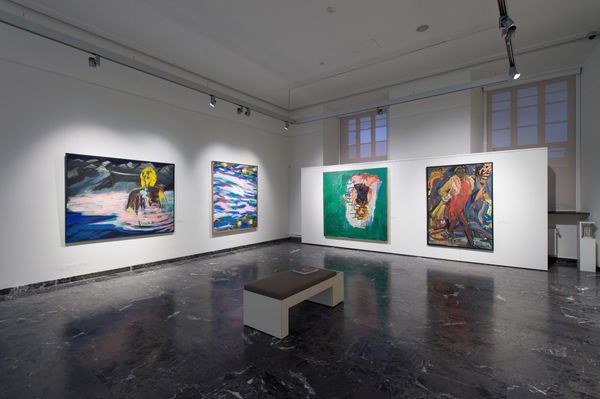
Installationsansichten