
Photo: Tara Wray

Photo: Tara Wray
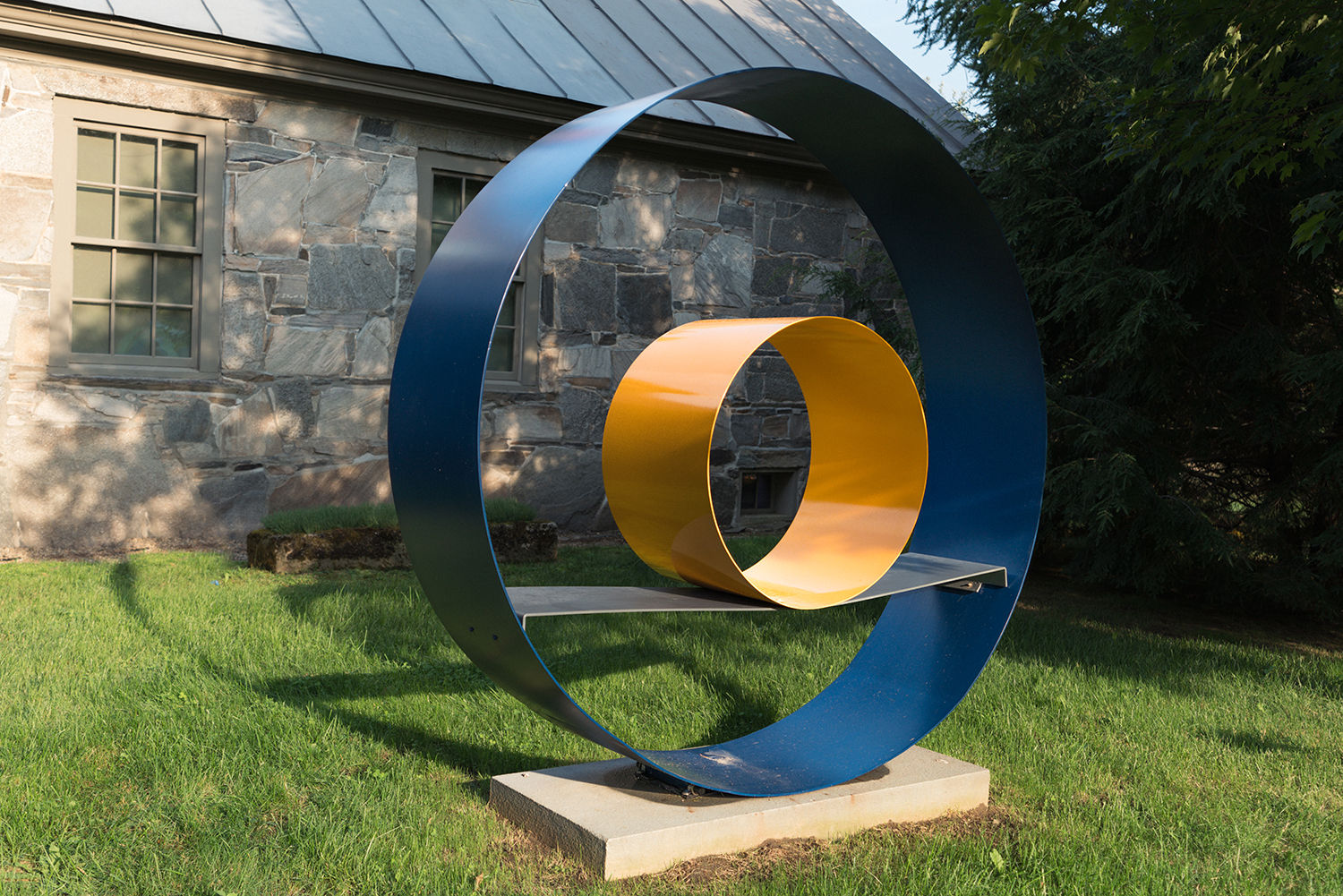
Photo: Tara Wray

Photo: Tara Wray

Photo: Tara Wray

Photo: Tara Wray

Photo: Tara Wray

Photo: Tara Wray

Photo: Tara Wray
David Annesley
Hall Collection
Weitere Abbildungen
-
(View a larger image of thumbnail 1
)
-
(View a larger image of thumbnail 2
)

-
(View a larger image of thumbnail 3
)

-
(View a larger image of thumbnail 4
)

-
(View a larger image of thumbnail 5
)

-
(View a larger image of thumbnail 6
)

-
(View a larger image of thumbnail 7
)

-
(View a larger image of thumbnail 8
)

-
(View a larger image of thumbnail 9
)

-
(View a larger image of thumbnail 10
)


Born in London in 1936, David Annesley is an English artist best known for the welded sheet metal sculptures he began making in the 1960s. Annesley attended the Saint Martin's School of Art in London from 1958 until 1962, where he was originally enrolled to study painting, but switched to the sculpture department in his second year, overseen by the English artist Sir Anthony Caro.
Caro began teaching at St. Martin's in 1953, revolutionizing concepts of abstract sculpture by introducing the use of "found" industrial metal scraps to create assemblage works. Breaking from the canon of sculpture centered on carving or molding dense objects, his works relied on the creation of form from thin, flat materials that could subsequently be welded or bolted together. In the late 1960's, Caro's abstract sculptural style also became known for its use of bright colors. Caro's techniques and classes produced a generation of revolutionary abstract artists who later became known as "The New Generation."
The name "The New Generation" derived from the title of a series of exhibitions held at the Whitechapel Gallery in London in the 1960s. The shows included works by Sir Anthony Caro as well as David Annesley, Phillip King, and Isaac Witkin, all former students of Caro. The concept of newness came from the stylistic choices each of the artists applied. "The New Generation" tried to distance themselves from the art of the 1950's, which Annesley described as, "some awful goddam, dark, murky underground field." In the late 1960's Annesley left England for America, where he was influenced by the burgeoning Pop Art scene.
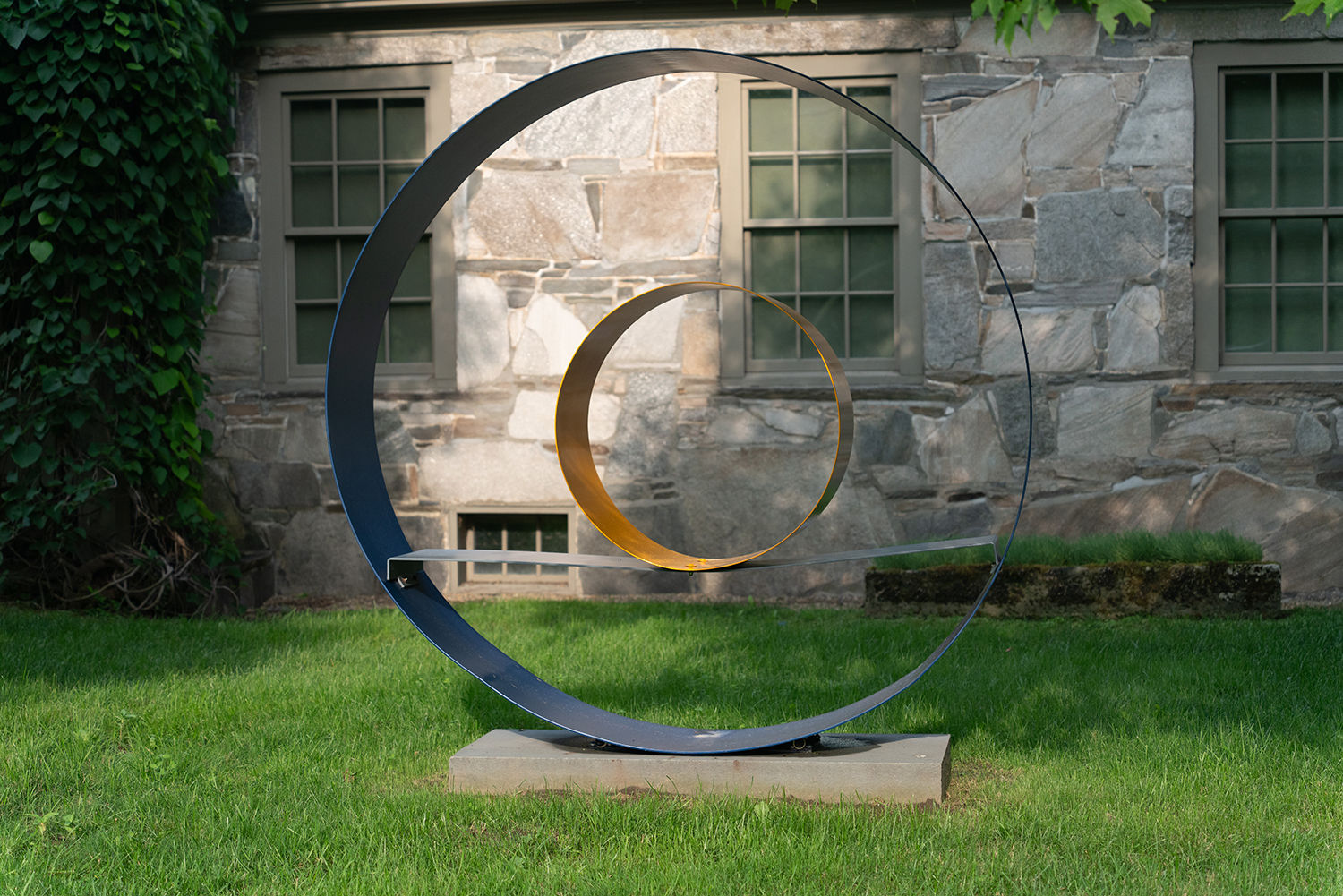
Annesley's first works relied on the implementation of steel found in scrap yards, like those of Caro. Comprised of simple geometrical shapes arranged in open compositions, these works often remained unpainted except for a lacquer finish to prevent the metal from further degradation or rust. Eventually, finding inspiration from the works of artists like Gonzales and Picasso, the industrial aesthetic of Annesley's sculptures became increasingly expressionist. Although the scale of Annesley's works grew with time, he never surpassed a dimension greater than that of the human body, allowing the center of his works to remain at eye-level.
In 1968, Annesley spent a summer with the painter, Kenneth Nolan in Bennington, Vermont where the two discussed the implementation of color extensively. Color was first introduced in Annesley's works with neutral shades, and eventually transitioned to soft pastels. For Annesley, "Colour had to indicate substance. You could only change colour if you changed elements. You couldn't paint another side of the same plane a different colour. Sculpture had to be weightless, energized, dematerialized, and translucent." Annesley's sculptures create a dialogue between color and form. Defying their heavy steel constructions, the pale hues intensify a sense of movement, dynamism and weightlessness.
Join our mailing list
* denotes required fields
We will process the personal data you have supplied to communicate with you in accordance with our Datenschutz. You can unsubscribe or change your preferences at any time by clicking the link in our emails.