Photo: Tara Wray
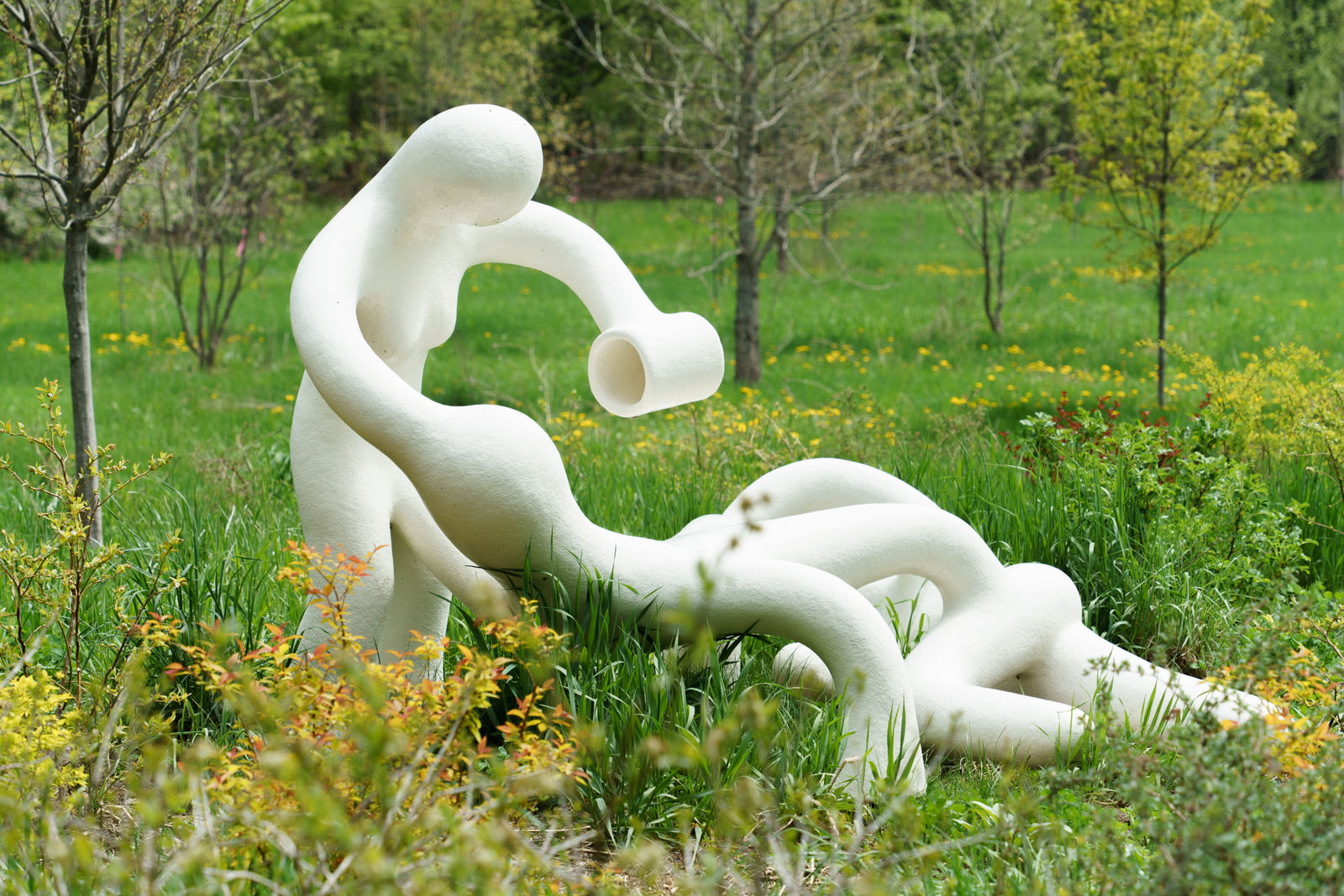
Photo: Tara Wray
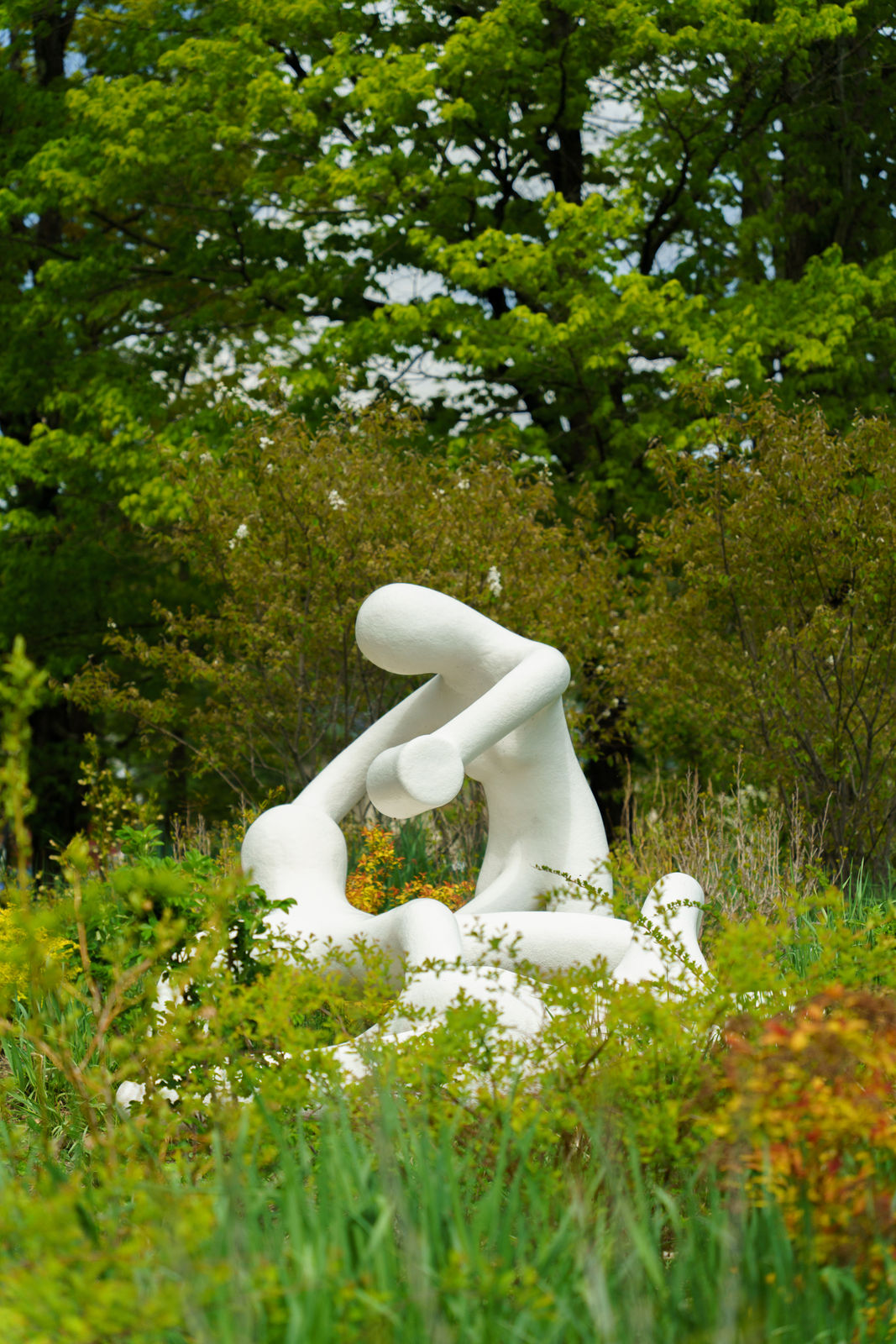
Photo: Tara Wray

Photo: Tara Wray
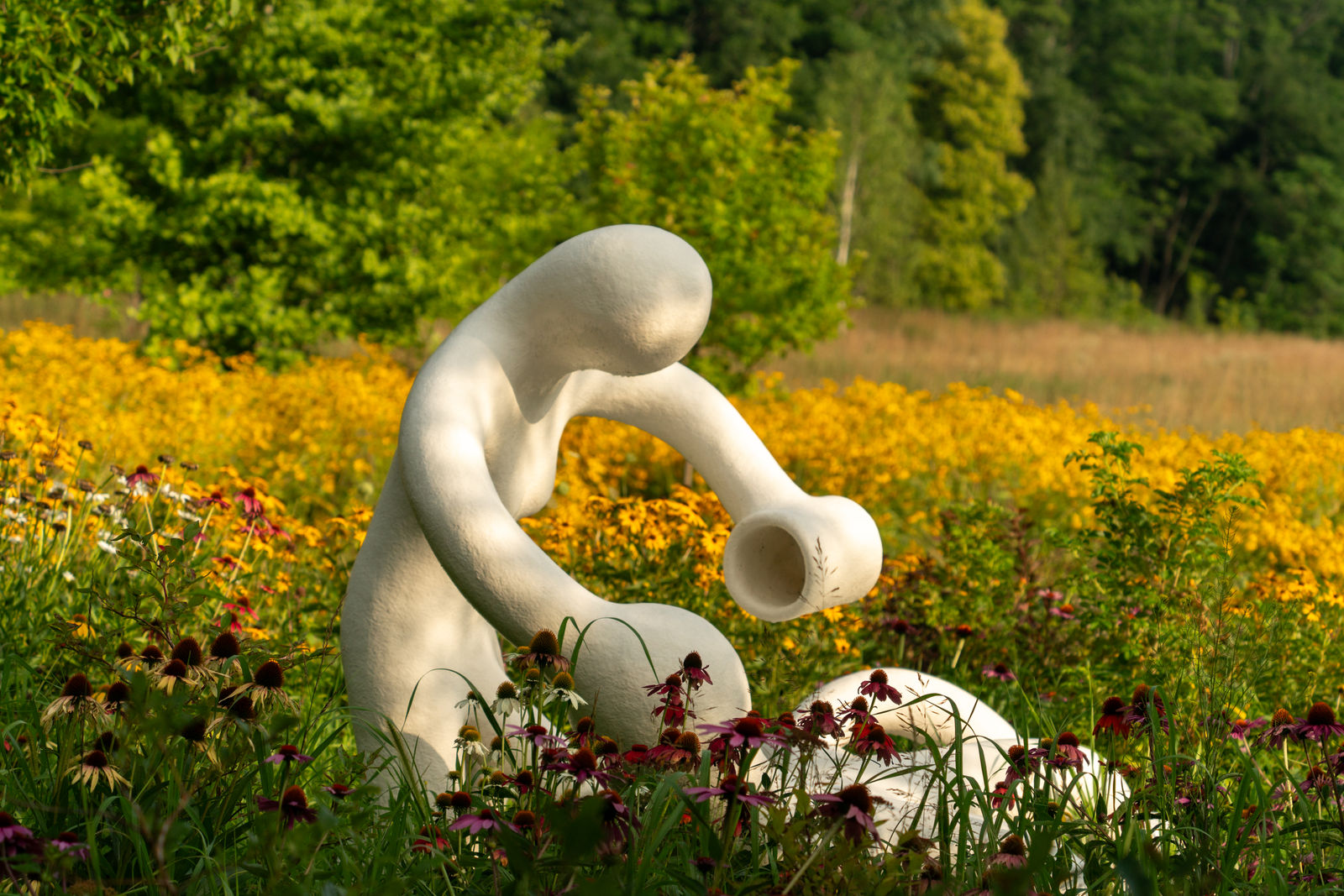
Photo: Tara Wray
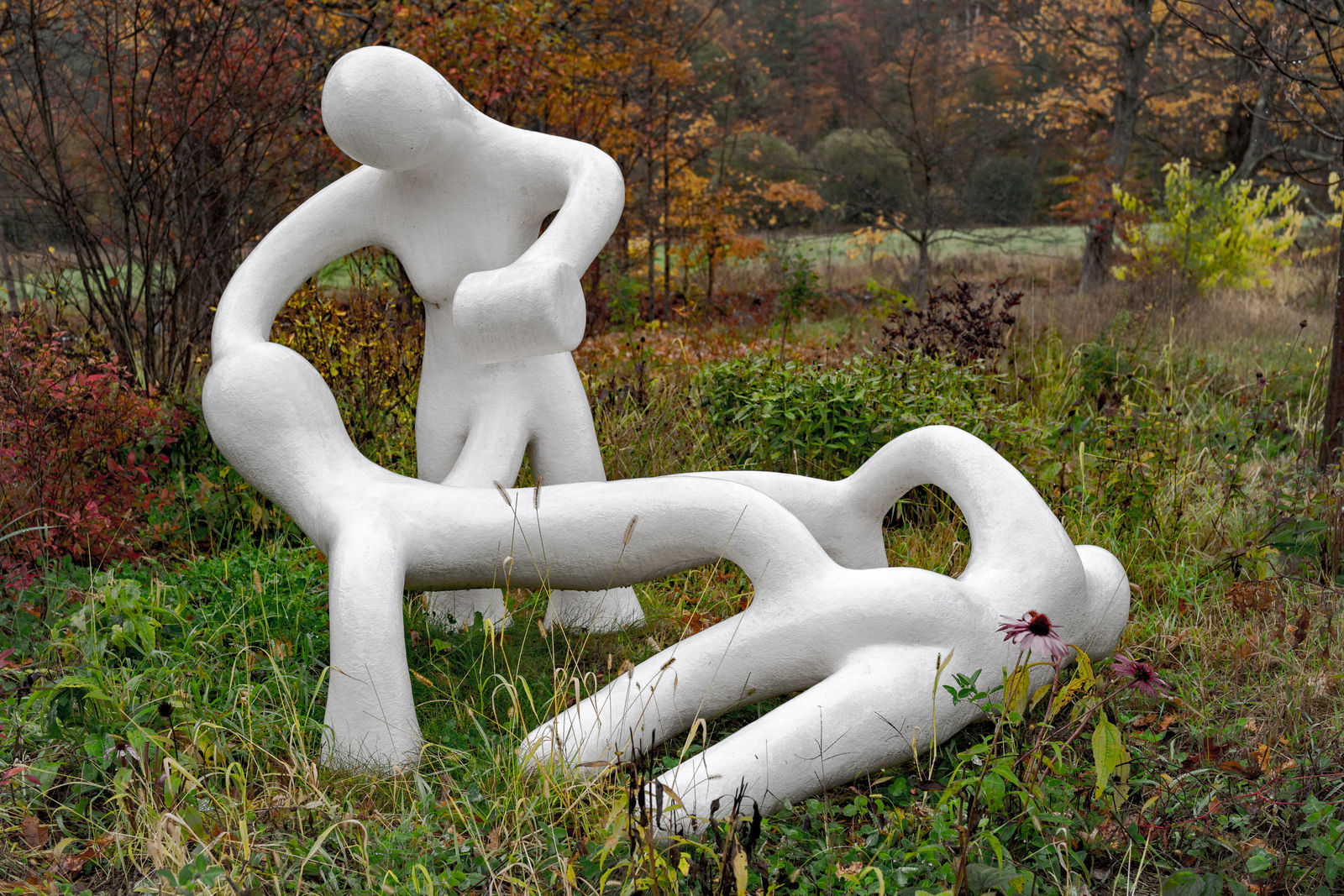
Photo: Tara Wray
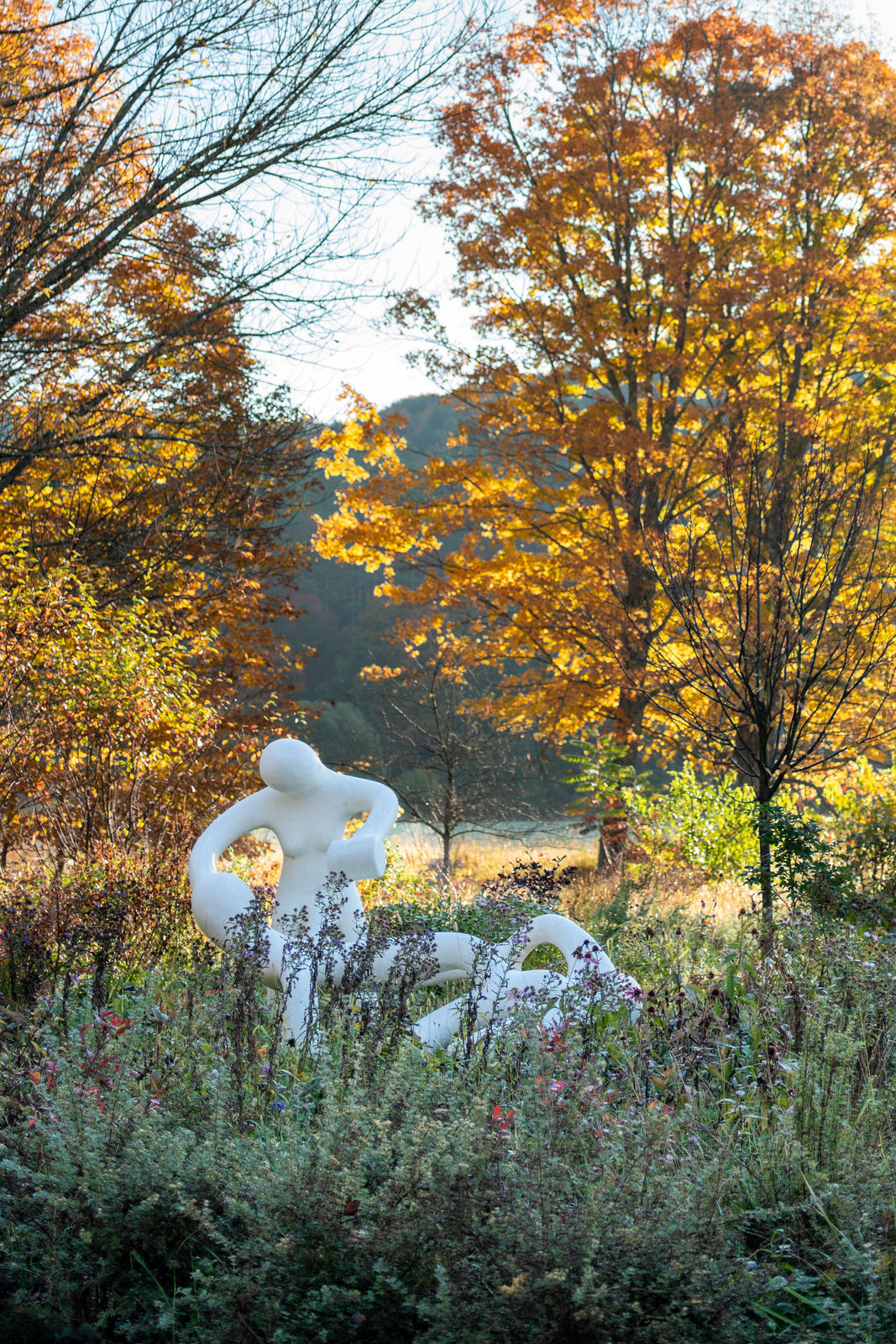
Photo: Tara Wray
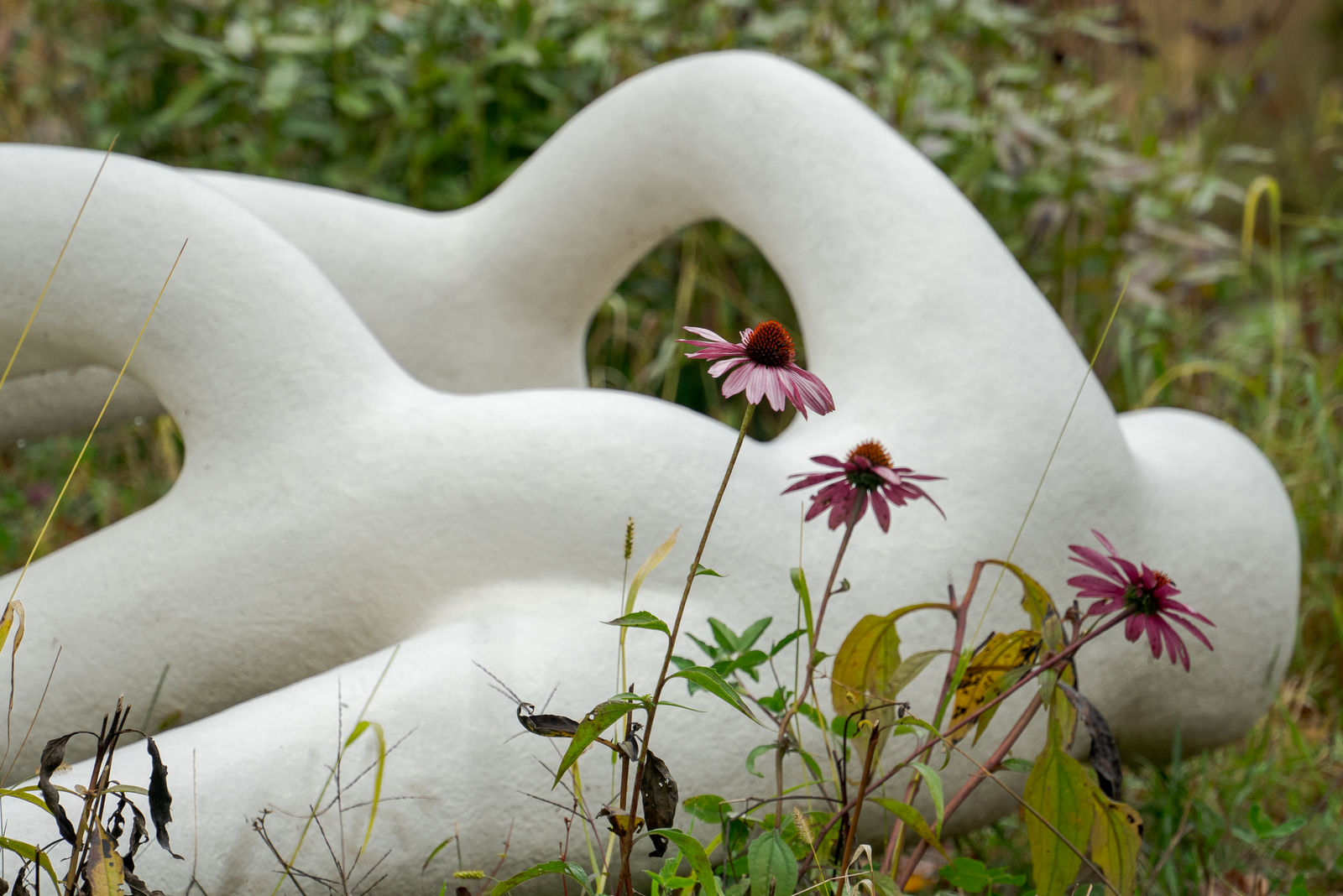
Photo: Tara Wray
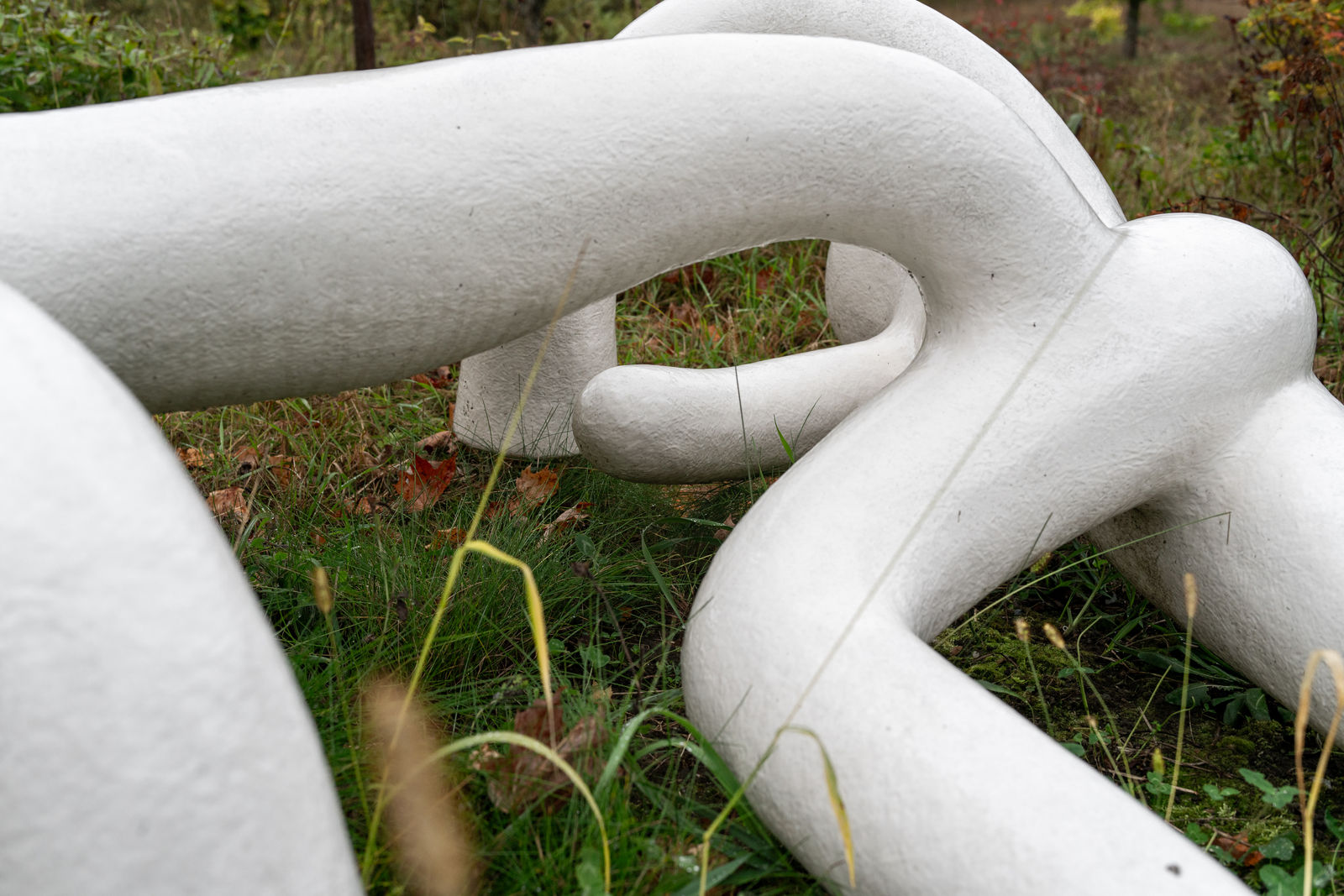
Photo: Tara Wray

Photo: Tara Wray

Photo: Tara Wray
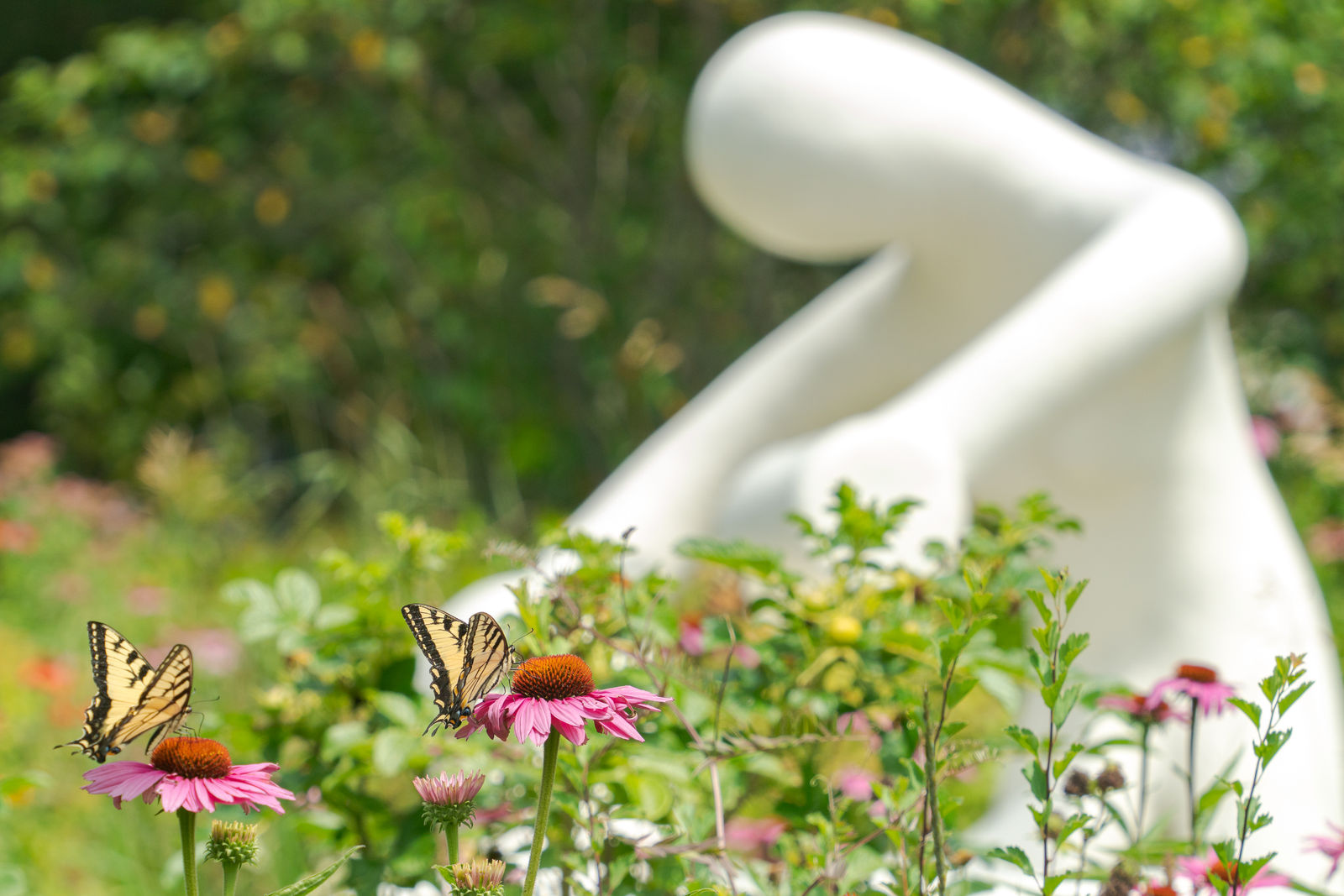
Photo: Tara Wray

Photo: Tara Wray

Photo: Tara Wray
Atelier Van Lieshout
Weitere Abbildungen
-
(View a larger image of thumbnail 1
)
-
(View a larger image of thumbnail 2
)
-
(View a larger image of thumbnail 3
)
-
(View a larger image of thumbnail 4
)
-
(View a larger image of thumbnail 5
)

-
(View a larger image of thumbnail 6
)
-
(View a larger image of thumbnail 7
)
-
(View a larger image of thumbnail 8
)
-
(View a larger image of thumbnail 9
)
-
(View a larger image of thumbnail 10
)
-
(View a larger image of thumbnail 11
)

-
(View a larger image of thumbnail 12
)
-
(View a larger image of thumbnail 13
)
-
(View a larger image of thumbnail 14
)
-
(View a larger image of thumbnail 15
)
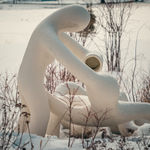


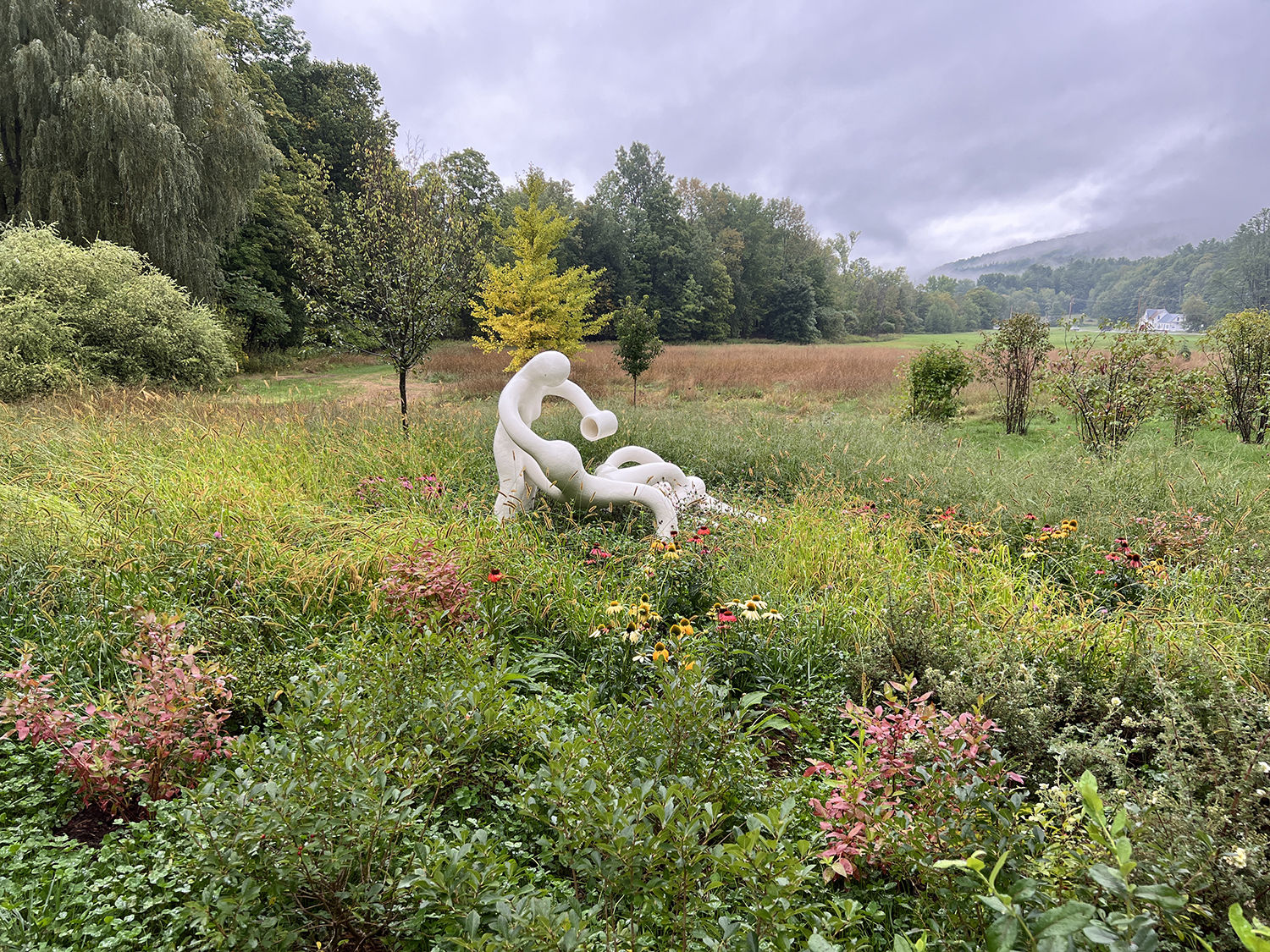
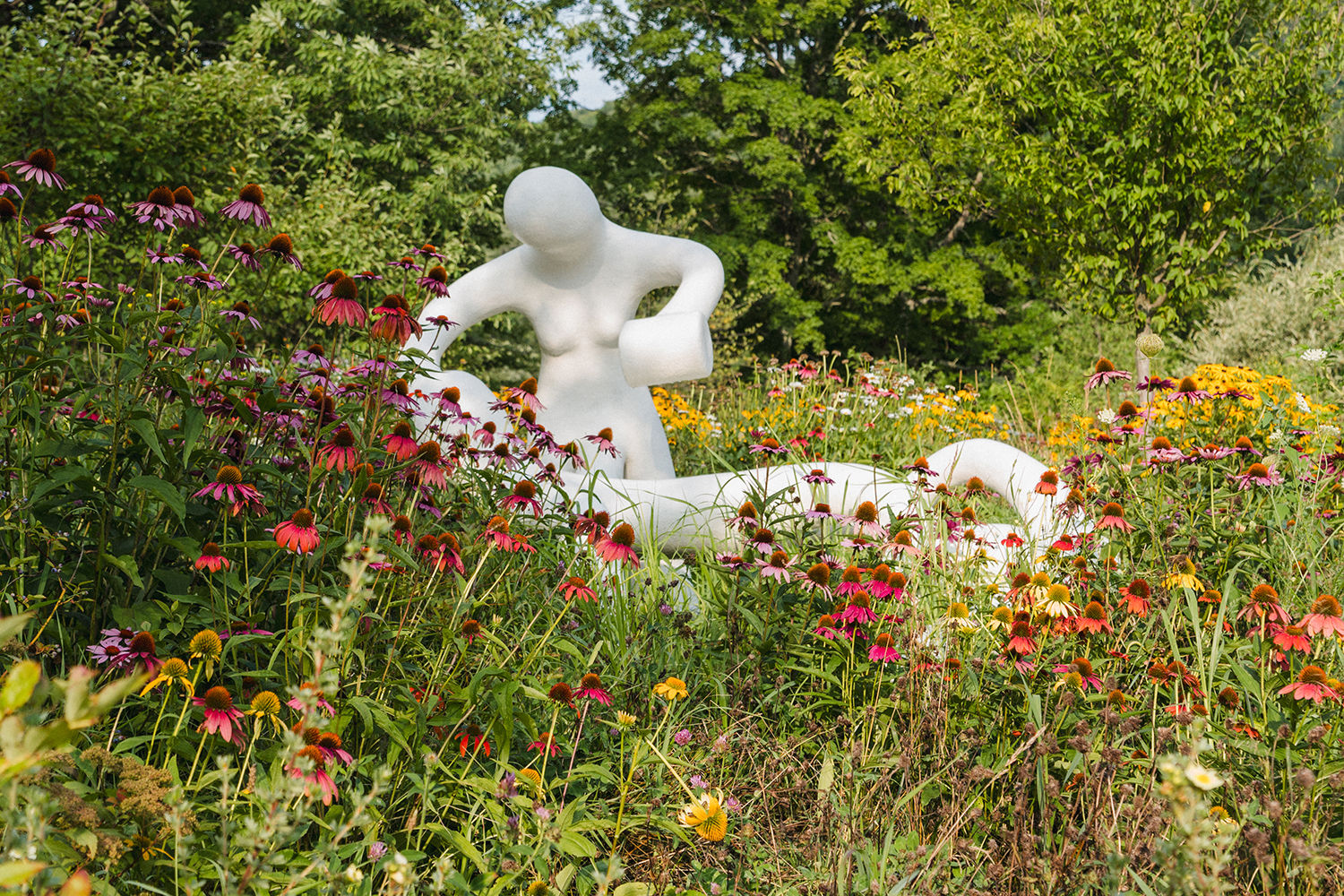
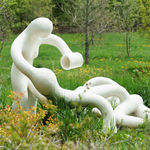
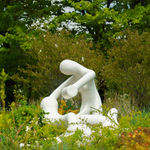
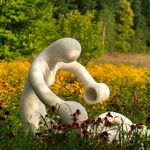
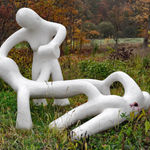
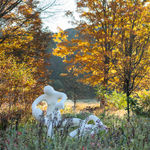
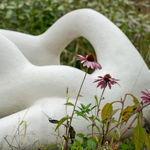
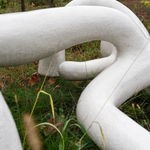
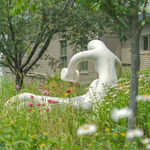
Bacchus and His Two Assistants depicts Atelier van Lieshout's standardized "AVL Man" -- simplified, modular and faceless fiberglass figures made "in the image of the ideal employee". Bacchus and His Two Assistants belongs to a series of sculptures that depict the "AVL Man" in poses that reference classical artworks. Inspired by the traditional image of Bacchus, the Roman god of agriculture, wine, and fertility (also known as Dionysus in Greek mythology), who is frequently represented in festive scenes of bountiful merrymaking such as in Titian's The Bacchanal of the Andrians (1523-1526), this sculpture depicts Bacchus and his two assistants without clear bodily separation nor distinct facial expression, morphed into a collective unit. While the organic and anamorphic shapes made with modern synthetic fiberglass and polyurethane resemble classical marble sculptures, Bacchus and His Two Assistants deviates from the traditional iconography of Bacchus, depicting an intimate collective of indulgence.